-
Auteur :
 TCF Canada
- Dec 21, 2025
TCF Canada: Complete Guide to the French Language Test for Canadian Immigration
- Blog
- /
- Article

The Test de connaissance du français pour le Canada (TCF Canada) is an essential French language proficiency test for individuals seeking to immigrate to Canada or obtain Canadian citizenship. This internationally recognized certification is specifically designed to assess the French language skills required for economic immigration applications to Immigration, Refugees and Citizenship Canada (IRCC).
What is TCF Canada?
TCF Canada is a standardized French language proficiency test administered by France Éducation international. It evaluates candidates' ability to understand and use French in everyday situations, professional contexts, and academic settings. The test provides an accurate assessment of language skills according to the Common European Framework of Reference for Languages (CEFR), with results ranging from level A1 (beginner) to C2 (mastery).
Purpose and Official Recognition
TCF Canada serves several critical immigration purposes:
- Economic Immigration: Required for applications through the Express Entry system and other economic immigration programs
- Canadian Citizenship: Essential for citizenship applications where French language proficiency is required
- Quebec Immigration: Since January 2022, TCF Canada is also recognized by the Ministère de l'Immigration, de la Francisation et de l'Intégration (MIFI) for applications to immigrate to Quebec
Important Note: No exemptions can be granted for TCF Canada under any circumstances. All applicants must complete the full examination.
Test Structure and Format
TCF Canada consists of four mandatory components that assess comprehensive French language skills. The complete examination takes 2 hours and 47 minutes. All four sections must be completed, and the test evaluates both receptive skills (listening and reading) and productive skills (writing and speaking).
1. Listening Comprehension (Compréhension orale)
Duration: 35 minutes
Format: 39 multiple-choice questions with 4 answer options (only one correct answer)
This section evaluates your ability to understand spoken French in various contexts:
- Everyday conversations and common expressions in daily communication situations
- Telephone conversations, interviews, and interpersonal exchanges
- Information from announcements, messages, and simple instructions
- Radio and television broadcasts on current events
- Professional and personal subject presentations
Critical Note: Each audio recording is played only once, and questions are asked after listening to the audio. Candidates must answer progressively from easier to more difficult questions.
2. Reading Comprehension (Compréhension écrite)
Duration: 60 minutes
Format: 39 multiple-choice questions with 4 answer options (only one correct answer)
This section assesses your ability to understand written French across different text types:
- Simple words, phrases, and messages in formal and informal correspondence
- Common documents such as classified ads, brochures, menus, and schedules
- Personal correspondence and factual information about people and events
- Articles and reports with specific viewpoints on concrete or abstract subjects
- Specialized articles, long complex factual texts, and literary works
Questions follow a principle of progressive difficulty, starting with basic comprehension and advancing to more complex analytical reading.
3. Written Expression (Expression écrite)
Duration: 60 minutes
Format: 3 writing tasks
This section evaluates your ability to express yourself in written French through three distinct tasks:
Task 1: Descriptive Message
- Word count: 60-120 words
- Objective: Write a message to one or more specified recipients to describe, explain, or narrate something
Task 2: Article, Letter, or Report
- Word count: 120-150 words
- Objective: Report an experience or tell a story, supported by comments, opinions, or arguments depending on the purpose (complaint, reconciliation, etc.)
Task 3: Comparative Analysis
- Word count: 120-180 words
- Objective: Compare two viewpoints on a social issue from provided documents and express your own opinion
Assessment Criteria:
- Clarity of message communication
- Provision of requested information
- Ability to describe, explain, and justify positions
- Logical connection of ideas and discourse coherence
- Appropriate vocabulary and grammatical structures
Warning: A score of "A1 not achieved" may be assigned if writing is illegible, word limits are not respected, responses are off-topic, or tasks are incomplete.
4. Oral Expression (Expression orale)
Duration: 12 minutes total (including 2 minutes preparation time)
Format: Individual face-to-face interview with an examiner, consisting of 3 exercises
This section evaluates your ability to speak French naturally and effectively:
Task 1: Structured Interview (2 minutes, no preparation)
- Demonstrate ability to converse naturally with an unfamiliar person
- Discuss personal and family life, work, interests, and daily activities
Task 2: Interactive Exercise (5.5 minutes total, 2 minutes preparation)
- Obtain information in a common everyday situation
- Ask appropriate questions based on the communication context
Task 3: Expressing a Viewpoint (4.5 minutes, no preparation)
- Respond spontaneously and convincingly to an examiner's question
- Present arguments, discuss advantages and disadvantages
- Develop complex ideas in a structured, coherent manner
Registration Process
TCF Canada test sessions are organized throughout the year by approved examination centers worldwide. The registration process requires candidates to take several important steps:
- Find a Test Center: Locate the nearest approved TCF examination center through the France Éducation international website
- Contact the Center: Reach out directly to obtain information about available session dates and specific requirements
- Complete Registration: Follow the center's registration procedures, which may vary by location
- Pay Examination Fees: Fees vary by center (typically ranging from $340-$360 USD)
- Test Format: Confirm whether the test will be administered on paper or computer (both formats are available)
Special Accommodations: Candidates requiring special arrangements due to disabilities should contact their test center well in advance. France Éducation international is committed to ensuring equal access and will work to provide necessary accommodations.
Results and Certificate Validity
Understanding your TCF Canada results is crucial for your immigration application:
- Processing Time: Results are sent to the test center within 15 working days from when France Éducation international receives the examination papers
- Certificate Collection: Collect your official certificate directly from the examination center where you took the test
- Validity Period: TCF Canada certificates are valid for 2 years from the date results are issued
- CEFR Levels: Results align with the six Common European Framework of Reference for Languages levels (A1, A2, B1, B2, C1, C2)
Important: Only one official certificate copy is issued. Keep a photocopy or scan for your records before submitting to immigration authorities.
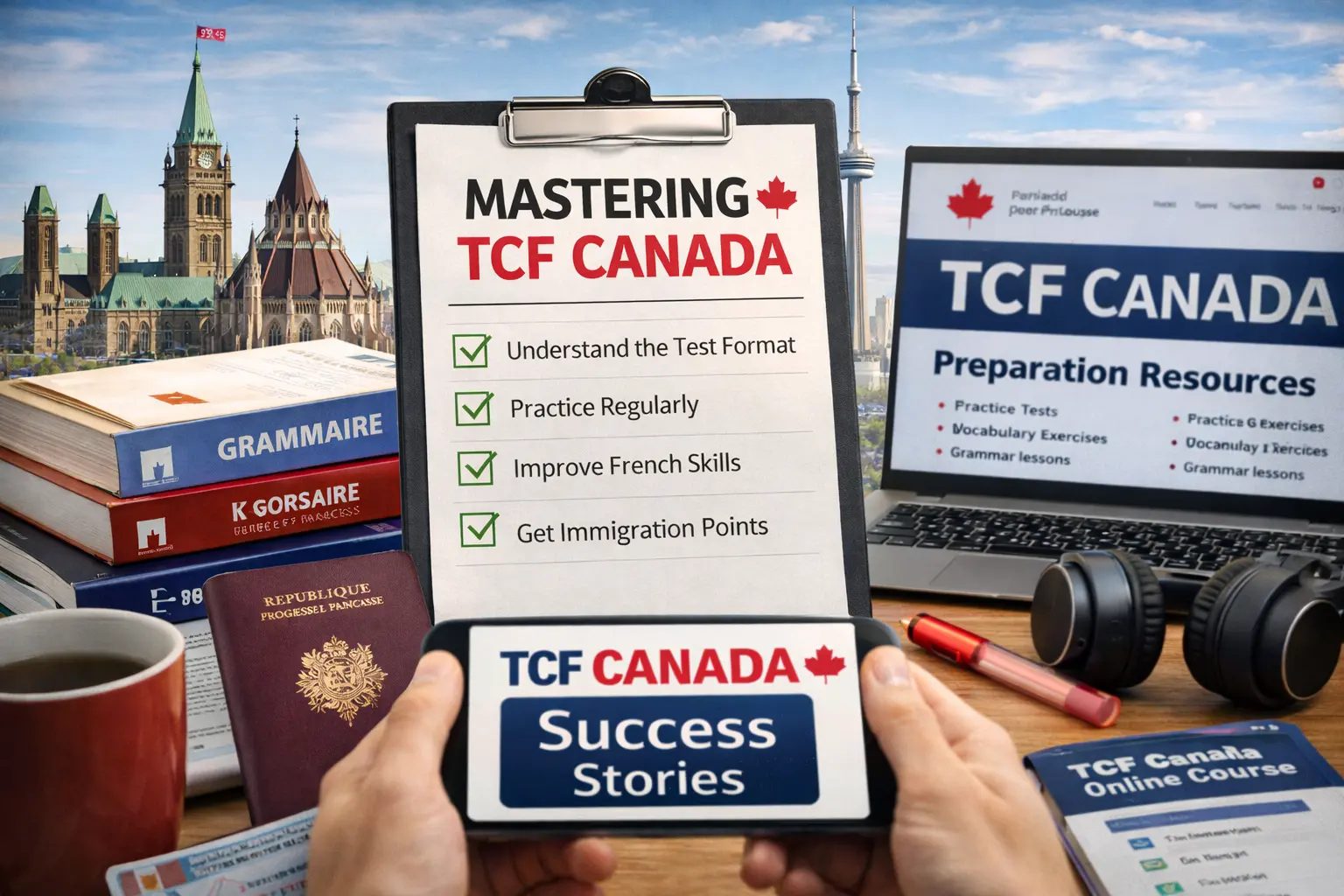
Test Preparation Strategies
TCF Canada assesses your overall French language competency rather than knowledge of a specific curriculum. Success depends on your genuine language abilities developed through consistent practice and immersion. However, effective preparation can significantly improve your performance.
Before the Test:
- Familiarize yourself thoroughly with the test format, structure, and timing
- Practice with official sample tests available on the France Éducation international website
- Immerse yourself in French through reading newspapers, watching French television, and listening to French radio
- Engage in regular conversation practice with native or fluent French speakers
- Consider enrolling in preparation courses or working with a qualified tutor
During the Test:
- Read all instructions carefully before beginning each section
- Concentrate intensely during the listening comprehension section (recordings play only once)
- Manage your time wisely, especially in reading comprehension and writing sections
- Avoid spending excessive time taking notes during multiple-choice sections
- Ensure all three writing tasks are completed within the word count requirements
Recommended Resources:
- RFI (Radio France Internationale) - Le français facile website for listening practice
- TV5Monde - Interactive TCF preparation exercises
- Official TCF preparation materials from France Éducation international
- French language textbooks aligned with CEFR levels
Practical Information and Important Considerations
Test Day Logistics:
- The examination may be scheduled over half a day or a full day depending on the number of candidates
- Test times cannot be changed once scheduled
- Expect potential waiting periods between different examination sections
- Bring valid government-issued photo identification
Anti-Fraud Measures:
France Éducation international takes examination integrity seriously. Cheating or attempted cheating on TCF Canada constitutes a serious violation that results in:
- Immediate disqualification from the examination
- Possible ban from future TCF examinations
- Potential criminal procedures under applicable laws
- Notification to relevant immigration authorities
Rights and Responsibilities:
All candidates have clearly defined rights and responsibilities throughout the testing process. These include the right to fair assessment, access to results within the specified timeframe, and the responsibility to follow all examination procedures and conduct themselves with integrity.
Conclusion
TCF Canada represents a crucial step in your Canadian immigration journey or citizenship application. By thoroughly understanding the test format, dedicating time to comprehensive preparation, and approaching the examination with confidence, you can demonstrate your French language proficiency effectively. Remember that genuine language competency developed through consistent practice and immersion is the foundation of success on this examination.
For the most current information about examination dates, approved test centers, registration procedures, and preparation resources, visit the official France Éducation international website or contact your nearest approved TCF examination center. With proper preparation and dedication, TCF Canada can open doors to new opportunities in Canada's vibrant Francophone communities and contribute significantly to your immigration success.
* * *
Frequently Asked Questions
Both TCF Canada and TEF Canada are French language tests accepted for Canadian immigration, but they differ in format and administration. TCF Canada is administered by France Éducation international and has 39 questions per section for listening and reading. TEF Canada is administered by the Paris Chamber of Commerce and has 50-60 questions per section. Both tests assess the same four skills and use similar scoring systems (CEFR and CLB levels). Neither test is inherently easier than the other; the choice depends on test center availability and personal preference.
Yes, you can retake TCF Canada as many times as needed. However, most test centers require you to wait at least 30 days between test attempts. There is no limit to the number of times you can take the test, but you must pay the full examination fee for each attempt. Your best strategy is to prepare thoroughly before each attempt to achieve your target score.
The difficulty of TCF Canada depends on your current French proficiency level and your target score. The test is designed to assess genuine language ability across all proficiency levels from beginner (A1) to mastery (C2). With proper preparation, immersion in French language materials, and consistent practice, most candidates can achieve their target scores. The test is challenging but fair, and adequate preparation is key to success.
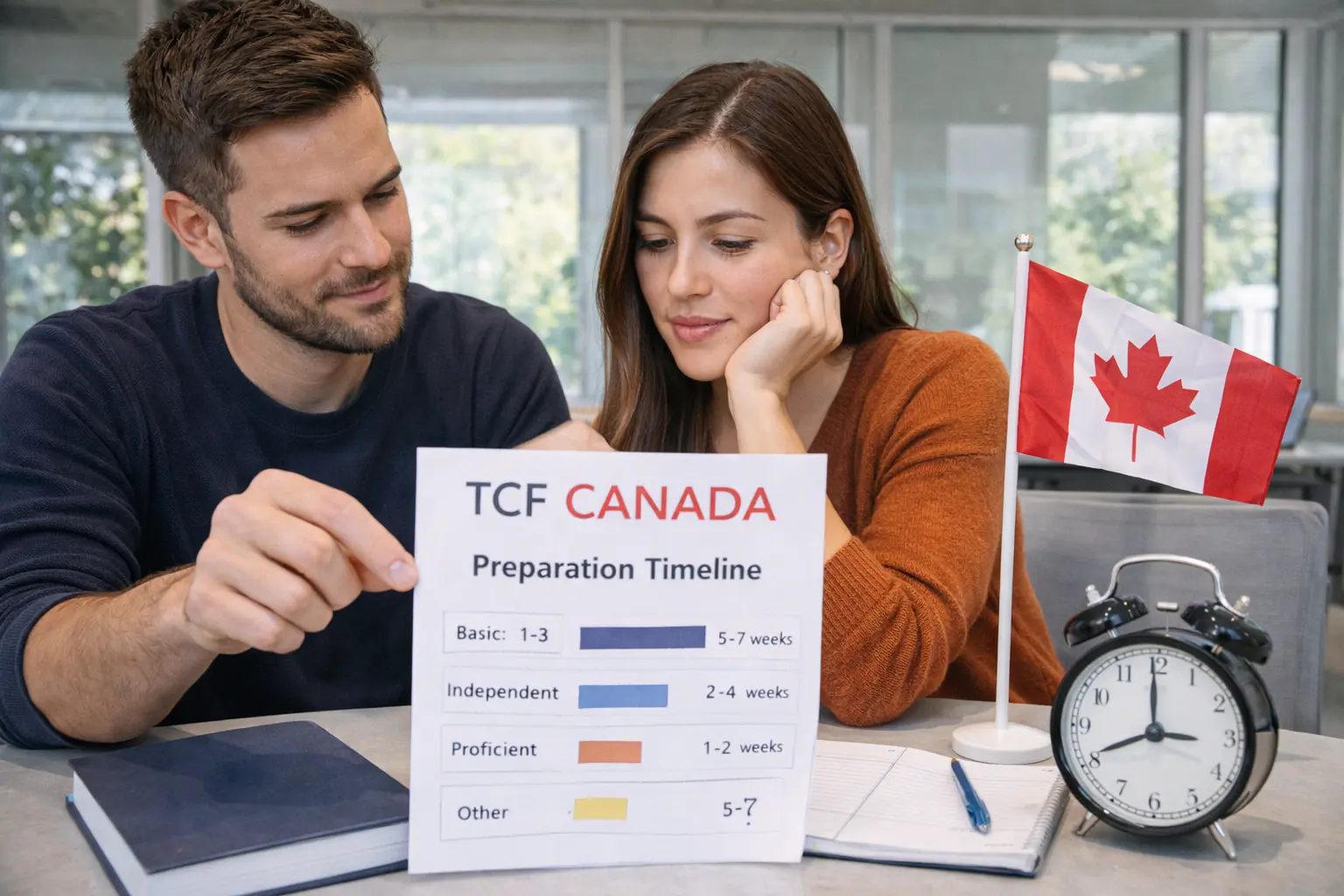
Yes, self-preparation is possible and many candidates successfully prepare independently. Start with comprehensive TCF preparation materials from TCFCanadaHub.com, where you'll find practice tests, study guides, and expert strategies specifically designed for TCF Canada success. Complement your studies by immersing yourself in French media, reading French newspapers and books, and practicing speaking with language exchange partners. TCFCanadaHub.com offers structured study plans, sample questions, and preparation timelines to keep you on track. However, if you need personalized guidance, have limited time, or are struggling with specific skills, consider our professional coaching services available at TCFCanadaHub.com for one-on-one support tailored to your target score.
Laissez un commentaire
Votreadresse email ne sera pas publie. Les champs obligatoires sont marque avec *

 TCF Canada Hub
0 Commentaires
aucun commentaire
Soyez le premier a partager votre avis !