-
Auteur :
 TCF Canada
- Mar 19, 2026
TCF Canada in Lebanon 2026: Beirut Test Centers, Natural Arabic–French Bilingualism, and Economic Crisis–Driven Exodus
- Blog
- /
- Article
TCF Canada in Lebanon 2026: Beirut Test Centers, Natural Arabic–French Bilingualism, and Economic Crisis–Driven Exodus
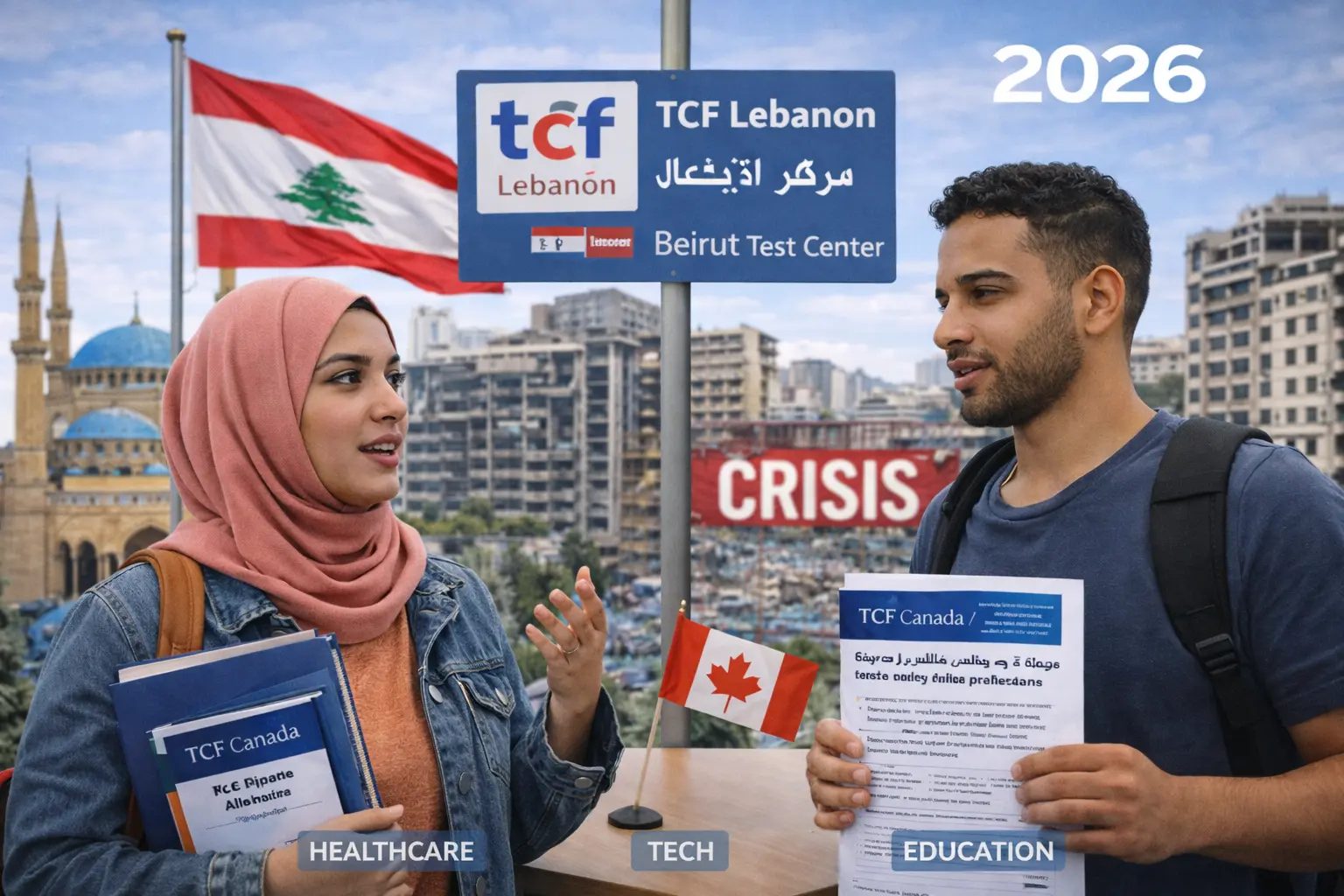
When Layla, a 31-year-old pharmacist from Beirut (Université Saint-Joseph graduate, naturally bilingual in Arabic and French since childhood), took the TCF Canada in August 2026, the results reflected the strength of Lebanon’s francophone education system: NCLC 9-9-8-9 after just four weeks of targeted grammar review.
“Lebanon is unique in the Arab world—French isn’t just an academic language, it’s part of daily life,” she explains. “I grew up speaking Arabic at home, French from kindergarten through university (USJ follows the French system), and watching French TV channels. For me, the TCF was more a formality than a challenge.”
But the immigration context is radically different. Lebanon’s economic collapse between 2019 and 2026—currency devaluation of more than 95%, hyperinflation, electricity limited to a few hours per day, and widespread shortages—has turned immigration into a matter of economic survival, not career optimization. Layla now works in Montréal at a Jean Coutu pharmacy, earning 75,000 CAD per year—nearly 20 times the purchasing power of her Beirut salary in 2026.
This guide explains where to take the TCF Canada in Lebanon, why Lebanese Arabic–French bilingualism is a massive linguistic advantage, and how the ongoing crisis has transformed Canadian immigration into an existential necessity for many Lebanese professionals.
TCF Canada Test Centers in Lebanon (2026)
Beirut and Regional Options
| City | Test Center | Frequency | Fee (LBP / EUR equiv.) |
|---|---|---|---|
| Beirut | Institut Français du Liban (IFL) | 6–8 sessions / month | 550,000 LBP (≈380 EUR, black market) |
| Beirut | Université Saint-Joseph (USJ) | 4 sessions / month | 550,000 LBP |
| Tripoli | Centre Culturel Français – Tripoli | 1–2 sessions / month | 550,000 LBP |
| Saida (Sidon) | Alliance Française de Saida | 1 session / month | 550,000 LBP |
Payment note: Due to currency instability, most centers accept USD cash (around 380 USD).
Official resource: Institut Français du Liban
Natural Arabic–French Bilingualism in Lebanon (A Unique Advantage)
Historical Roots of Lebanese Francophonie
- 1920–1943: Lebanon placed under French mandate after World War I.
- French educational system widely implemented nationwide.
- French adopted as a prestige and professional language by major communities.
- Post-independence: French maintained alongside Arabic in education and public life.
Francophonie in Lebanon (2026 Snapshot)
| Indicator | Data | Context |
|---|---|---|
| Population speaking French | ≈45% (1.8M people) | Highest rate in the Arab world |
| Francophone schools | 500+ institutions | Nationwide dense network |
| French-language universities | USJ, USEK, branches of Lebanese University | Top-tier in MENA region |
| French media consumption | L’Orient-Le Jour, bilingual TV channels | Mainstream daily use |
Typical Francophone Lebanese Profiles & TCF Outcomes
| Profile | French Level | Typical TCF Canada Result | Preparation Time |
|---|---|---|---|
| French schools + USJ graduate | C1–C2 | NCLC 9–10 | 3–6 weeks (format familiarization) |
| Anglophone universities (AUB, LAU) | B2–C1 | NCLC 8–9 | 2–3 months |
| Public Arabic education | B1–B2 | NCLC 6–8 | 6–12 months |
Lebanon’s Economic Collapse (2019–2026): Immigration as Survival
A Collapse Without Precedent
- 2019: Banking crisis and frozen deposits.
- 2020: Sovereign default, COVID-19, Beirut port explosion.
- 2021–2023: Hyperinflation and currency freefall.
- 2024–2026: Partial stabilization at a very low baseline; economy largely destroyed.
Real Salary Collapse (Purchasing Power)
| Profession | 2019 Salary | 2026 Salary (LBP) | USD Equivalent | Loss |
|---|---|---|---|---|
| Physician | 4,000 USD / month | 80M LBP | ≈900 USD | -78% |
| Pharmacist | 2,500 USD | 50M LBP | ≈550 USD | -78% |
| Engineer | 2,000 USD | 40M LBP | ≈450 USD | -78% |
| Teacher | 1,200 USD | 25M LBP | ≈280 USD | -77% |
Mass Lebanese Emigration (2019–2026)
- 300,000–400,000 people left Lebanon (7–10% of population).
- Main destinations: France, Canada, Gulf states, Americas.
- Severe brain drain: healthcare, engineering, IT, finance.
Lebanese Immigration Profiles to Canada (2026)
Profile 1: Healthcare Professionals
Strong French, internationally recognized degrees, and collapsing local healthcare wages make Canadian immigration a primary exit strategy.
Profile 2: Tech & Startup Professionals
Lebanon’s once-thriving startup ecosystem collapsed with the crisis. Young bilingual professionals now leverage English + French to access Canadian tech roles with salaries 10–15 times higher than local earnings.
Dual and Triple Lebanese Nationality (Common Strategy)
| Nationality | Advantage | Recommendation |
|---|---|---|
| French | Strong passport, high diploma recognition | Optimal if available |
| Canadian | PR or citizenship via previous waves | Use if applicable |
| Lebanese only | No complications | Still fully viable |
Total Immigration Budget: Lebanon → Canada
| Item | USD | LBP Equivalent |
|---|---|---|
| TCF Canada | 380 | 34M |
| ECA (diplomas) | 300 | 27M |
| IRCC fees | 1,300 | 117M |
| Total | ≈2,330 USD | ≈209M LBP |
Conclusion
Lebanon represents a unique case in Canadian immigration. On one hand, it offers a massive linguistic advantage—natural Arabic–French bilingualism that makes NCLC 8–10 achievable in weeks. On the other, an unprecedented economic collapse has transformed immigration into an act of survival rather than career planning.
For many Lebanese families, the financial sacrifice required to immigrate is enormous. Yet for thousands each year, Canada represents stability, dignity, and a future that no longer exists at home.
Related TCF Canada Hub Articles:
- Canadian Immigration System and TCF Canada: Understanding Express Entry & Language Points
- How to Calculate Your TCF Canada Points for Immigration
- Life in Canada: Cultural and Linguistic Context for Successful Integration
- TCF Canada Validity and Its Critical Impact on Your Immigration Timeline
- Complete TCF Canada Ultimate Guide 2026
- Strategic TCF Canada Planning: The Proven 3-Month Method
Frequently Asked Questions
For many Lebanese candidates, yes. Due to Lebanon’s long-standing francophone education system, a large portion of professionals are naturally bilingual in Arabic and French. Graduates from French-language institutions (such as USJ or other francophone schools) often reach NCLC 8–10 with minimal preparation focused mainly on exam format and grammar review.
The average fee is around 380 USD (often paid in USD cash due to currency instability). Prices may be listed in Lebanese pounds, but exchange rates fluctuate significantly. Candidates should verify directly with the Institut Français du Liban or the selected test center before registering.
Lebanon’s economic collapse (banking crisis, currency devaluation above 95%, hyperinflation, infrastructure breakdown) severely reduced purchasing power and professional stability. For many bilingual Lebanese professionals, strong French proficiency combined with TCF Canada provides a realistic and fast immigration pathway toward economic security.
Laissez un commentaire
Votreadresse email ne sera pas publie. Les champs obligatoires sont marque avec *



 TCF Canada Hub
0 Commentaires
aucun commentaire
Soyez le premier a partager votre avis !