-
Auteur :
 TCF Canada
- Mar 23, 2026
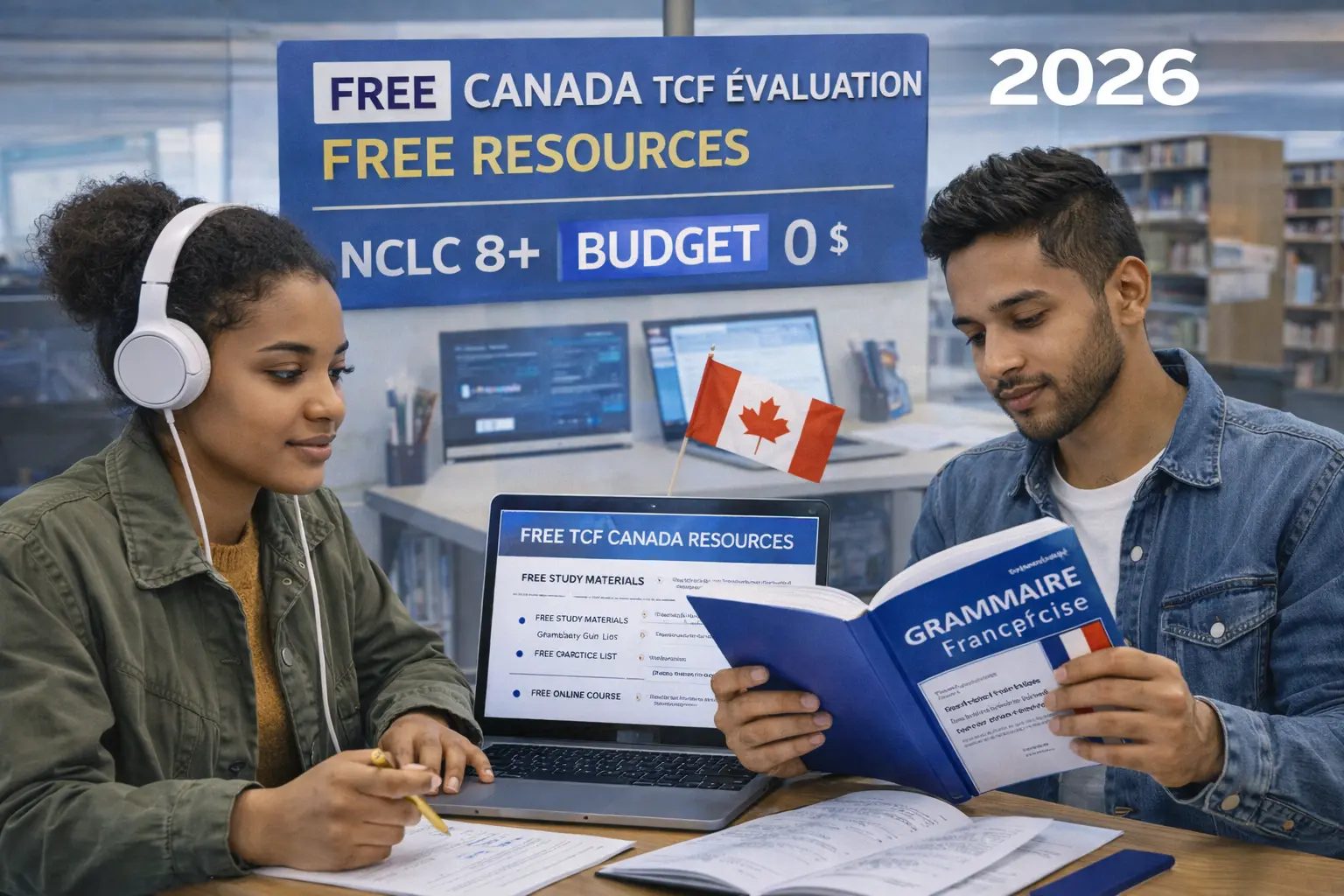
Preparing for TCF Canada on a Limited Budget (2026): The Complete Guide to Free Resources to Reach NCLC 8+ with a $0 Investment
- Blog
- /
- Article
Preparing for TCF Canada on a Limited Budget (2026): The Complete Guide to Free Resources to Reach NCLC 8+ with a $0 Investment
When Youssef, a 24-year-old master’s student in Tunis, decided to take the TCF Canada in February 2026, his total available budget was exactly 600 CAD: 450 CAD for the mandatory exam fees, and 150 CAD as an emergency buffer—absolutely nothing for preparation. “Every guide I read talked about private courses at 1,500 CAD, official books for 200 CAD, premium apps for 150 CAD, or tutors at 30 CAD per hour. If I had followed those recommendations, I would have needed a 2,000–3,000 CAD prep budget—impossible for me,” he explains today, after scoring NCLC 8-8-8-7 (Listening 8, Reading 8, Writing 8, Speaking 7).
“So I built a 100% free preparation plan using online resources. The result: 12 weeks of intensive study, zero dollars spent on materials, and scores strong enough for my Express Entry profile (CRS 438 points, ITA received 5 weeks after creating my profile through a francophone draw).”
This guide proves a truth the language-prep industry prefers not to highlight: you can reach NCLC 8–9 on TCF Canada with exactly $0 in preparation costs—if you have the right strategy, discipline, and the correct free resources. The problem is not lack of money. The problem is lack of information on where to find free resources with quality comparable to paid options. Limited budget ≠ limited results. With this guide, you’ll build your own high-performance TCF Canada pathway without spending a cent.
The Truth About TCF Canada Preparation Budgets
How Much Do Candidates Really Spend? (2026 Survey)
| Budget Category | % of Candidates | Average Spending | Average NCLC Score | Budget–Score Correlation |
|---|---|---|---|---|
| 0–200 CAD (Free/Minimal) | 35% | 85 CAD (used books, freemium apps) | NCLC 7.4 | NCLC 8+ is possible with discipline |
| 200–800 CAD (Moderate) | 42% | 520 CAD (1–2 new books, a few lessons, apps) | NCLC 7.8 | Marginal improvement vs free |
| 800–2,000 CAD (Comfortable) | 18% | 1,350 CAD (partial private course, tutoring, full materials) | NCLC 8.1 | +0.3 levels vs moderate (low ROI) |
| 2,000+ CAD (Premium) | 5% | 3,200 CAD (intensive programs, dedicated tutor, immersion) | NCLC 8.4 | +0.3 levels vs comfortable |
Surprising statistical insight: The performance gap between candidates spending 0–200 CAD (average NCLC 7.4) and candidates spending 2,000+ CAD (average NCLC 8.4) is only one NCLC level. That means an extra 2,000 CAD “buys” about +1 NCLC on average—an improvement you can often achieve for free with an additional 2–3 months of intensive preparation. The critical factor is not money. It’s time invested × resource quality × daily discipline.
The $0 Strategy: Free Resources by Skill
Skill #1: Listening Comprehension (100% Free)
Free Resource #1: Advanced-Level French Podcasts
France Culture — Recommended Shows:
- “Les Chemins de la philosophie” (58 min/episode, rich academic vocabulary) — Link
- “La Méthode scientifique” (58 min, scientific terminology—excellent for NCLC 8–9)
- “Cultures Monde” (international news, fast natural speech)
- How to use it: 30–45 minutes/day while commuting, exercising, or doing chores = effective passive exposure
RFI Savoirs — Structured Free Listening Exercises:
- Website: RFI Savoirs
- Content: 3,000+ free listening exercises with transcripts + comprehension questions
- Levels: A2 to C1 (perfect to move from NCLC 6 → NCLC 9)
- Format: 3–8 minute reports + MCQ with automatic correction (TCF-style)
- Action plan: 3 exercises/day × 90 days = 270 exercises = strong listening mastery
YouTube — High-Quality French Channels:
- TV5MONDE: journalistic reports, international standard French
- ARTE: documentaries, sophisticated vocabulary
- Le Monde (video): news analysis, fast journalistic flow
- Best trick: turn on French subtitles for first listen, then rewatch without subtitles
Free Weekly Listening Plan:
| Day | Morning Activity (30 min) | Evening Activity (30 min) | Total Time |
|---|---|---|---|
| Monday | France Culture podcast (commute) | 3 RFI Savoirs exercises | 60 min |
| Tuesday | ARTE documentary (YouTube) | RFI news podcast | 60 min |
| Wednesday | France Culture podcast | 3 RFI Savoirs exercises | 60 min |
| Thursday | Le Monde videos | News podcast | 60 min |
| Friday | France Culture podcast | 3 RFI Savoirs exercises | 60 min |
| Saturday | French film with French subtitles (Netflix/YouTube) | Weekly review (vocabulary notes) | 150 min |
| Sunday | REST (no “study French”) | 0 min | |
| TOTAL | 7.5 hours/week × 12 weeks = 90 hours listening practice | 90h | |
Total cost: 0 CAD
Skill #2: Reading Comprehension (100% Free)
Free Resource #1: Online French Press
Le Monde — Daily Free Articles:
- Without subscription: 3–5 free articles/day (enough for prep)
- Recommended sections: International, Economy, Science (rich vocabulary)
- Ideal length: 800–1,500 words (similar to TCF texts)
- Method: 2 articles/day × 90 days = 180 articles = massive academic vocabulary
Your Local Public Library (if available):
- Many municipal libraries have French newspaper/magazine sections
- Often available: Le Monde, Le Figaro, L’Express, Le Point, Courrier International
- Access: free with a library card (often free for residents)
- Plan: go twice/week, read 1–2h on-site = 0 CAD
Project Gutenberg — Free Classic French Literature:
- Website: Project Gutenberg
- 70,000+ public domain books (ePub/PDF/Kindle)
- French authors: Hugo, Zola, Dumas, Verne, Balzac, etc.
- Tip: start with short stories (Maupassant 10–20 pages) before long novels
Wikisource — Annotated French Texts:
- Website: Wikisource
- Advantage: many texts include notes that clarify difficult vocabulary
Free Resource #2: Online Reading Exercises (TCF-style)
Bonjour de France:
- Website: Bonjour de France
- 1,500+ free reading exercises (all levels)
- Texts + MCQ with automatic correction (similar to TCF)
TV5MONDE Apprendre:
- Website: TV5MONDE Apprendre
- Exercises built around real news = modern vocabulary
Weekly Reading Plan:
- Mon–Fri: 2 Le Monde articles (45 min) + 5 Bonjour de France exercises (15 min) = 60 min/day
- Saturday: Library reading session (2h)
- Sunday: “pleasure reading” (Project Gutenberg) (1h)
- Total: 8–9 hours/week × 12 weeks = 96–108 hours
Total cost: 0 CAD
Skill #3: Writing (Almost Free)
The Challenge of $0 Writing Prep
Writing is the one skill where external feedback is close to mandatory. You can’t reliably correct grammar or style mistakes you don’t notice. The free solution: structured peer correction with native francophones.
Free Resource #1: r/WriteStreak (Reddit)
- Concept: A community for daily writing practice with free corrections by native speakers
- Link: r/WriteStreak (French) + r/WriteStreakFR
- How it works:
- Post a short text daily (150–300 words) on any topic
- Native speakers correct grammar, vocabulary, and style
- You can also correct others in return (language exchange logic)
- Benefits: daily feedback, supportive culture, fast progress
- Downside: corrections may take 24–48 hours
Free Resource #2: Lang-8 / HiNative (Freemium Options)
- Lang-8: correction exchange (you correct others; they correct you)
- HiNative: Q&A with natives (free basic tier; premium optional)
Free Resource #3: Systematic Self-Editing
Technique: “Write → Wait → Re-read”
- Write a TCF practice task (Task 1 or Task 2)
- Wait 24–48 hours (your brain “forgets” your text)
- Re-read as if it was written by someone else
- Catch obvious errors (often 30–40% are detectable this way)
- Post the improved version on r/WriteStreak for deeper corrections
Free Grammar Support Tools:
- LanguageTool (free): catches many grammar/spelling issues (limits apply)
- BonPatron (free): French grammar checker for common mistakes
- Important: These tools don’t replace human correction (false positives exist). Use them as pre-cleaning.
12-Week Writing Plan:
| Weeks | Daily Activity | Time/Day |
|---|---|---|
| 1–4 | 1 short r/WriteStreak text (200 words) + read corrections | 30 min |
| 5–8 | 1 TCF writing task every 2 days (300 words) + self-edit + post | 45 min |
| 9–12 | 1 full TCF writing set/day (Task 1 + Task 2) timed | 60 min |
Total cost: 0 CAD (using only free resources)
Optional minimal investment (if possible): 3 sessions with a tutor (around 60 CAD total) to target the biggest writing weaknesses identified by peer feedback.
Skill #4: Speaking (Almost Free)
The Speaking Challenge: Finding Free Conversation Partners
Speaking requires active practice with real humans—not just passive listening. Free options exist, but they require initiative.
Free Resource #1: HelloTalk / Tandem
- HelloTalk: language exchange app (voice + video available)
- Tandem: similar concept, different user base
- How to use it:
- Create profile: “Looking for French partners for Arabic–French exchange”
- Match with native francophones learning Arabic/English
- Do 30–60 min sessions (split languages fairly)
- Use built-in calls (free)
- Recommended frequency: 3–4 sessions/week × 30 min = 90–120 min speaking/week
Free Resource #2: Discord French Learning Servers
- Popular servers often include “French Learning,” “r/French,” and other large communities
- Voice rooms: group discussions available daily (intermediate–advanced)
- Benefit: relaxed vibe, varied topics, group practice can feel less intimidating than 1-to-1
Free Resource #3: Local Francophone Community Events (If Available)
- Many large cities have French cultural centers with free conversation meetups
- Alliance Française often hosts free public events (talks, screenings with discussion)
- Benefit: in-person practice + social francophone network
Free Self-Practice Methods (Highly Effective)
Technique: “Daily Audio Selfie”
- Use your phone to record 3–5 minutes
- Topic: describe your day, react to news, give an opinion (TCF-style prompts)
- Listen 24 hours later
- Identify hesitations, pronunciation issues, missing words
- Re-record the same topic with improvements
- Frequency: 10 min/day × 90 days = major fluency gains
Technique: “Live Narration”
- Narrate daily actions out loud in French while cooking, cleaning, or walking
- Example: “I’m preparing dinner. I’m cutting vegetables. The water is boiling…”
- Goal: automate structures (present, past, near future) without thinking
12-Week Speaking Plan:
| Weeks | Activity | Time/Week |
|---|---|---|
| 1–4 | HelloTalk 2×/week (30 min) + daily audio selfie (10 min) | 130 min |
| 5–8 | HelloTalk 3×/week + Discord voice 2×/week + daily audio selfie | 190 min |
| 9–12 | HelloTalk 4×/week + Discord 2× + timed TCF speaking simulations | 240 min |
Total cost: 0 CAD
The Best “Minimal Budget” Plan: Where to Spend 100–200 CAD (If You Can)
If you have a small optional prep budget (100–200 CAD), here is the highest ROI allocation:
150 CAD Budget Option
| Resource | Cost | ROI | Why It’s Worth It |
|---|---|---|---|
| 1 official TCF Canada book (complete preparation) | 60 CAD | HIGH | Official practice tests = closest simulation to real exam format |
| 3 writing feedback sessions (Italki) | 60 CAD (20 CAD × 3) | VERY HIGH | Personalized correction on your specific weaknesses = fast improvement |
| 1 speaking session (Italki/Preply) | 25 CAD | MEDIUM | Mock TCF interview + pronunciation and structure coaching |
| Buffer | 5 CAD | - | Flexibility |
| TOTAL | 150 CAD | - | Perfectly complements the free plan |
Expected outcome: Free resources (90% of prep) + targeted 150 CAD investment (10% for critical weak points) = NCLC 8 is reachable for 85–90% of disciplined candidates.
Full 12-Week $0 Preparation Plan
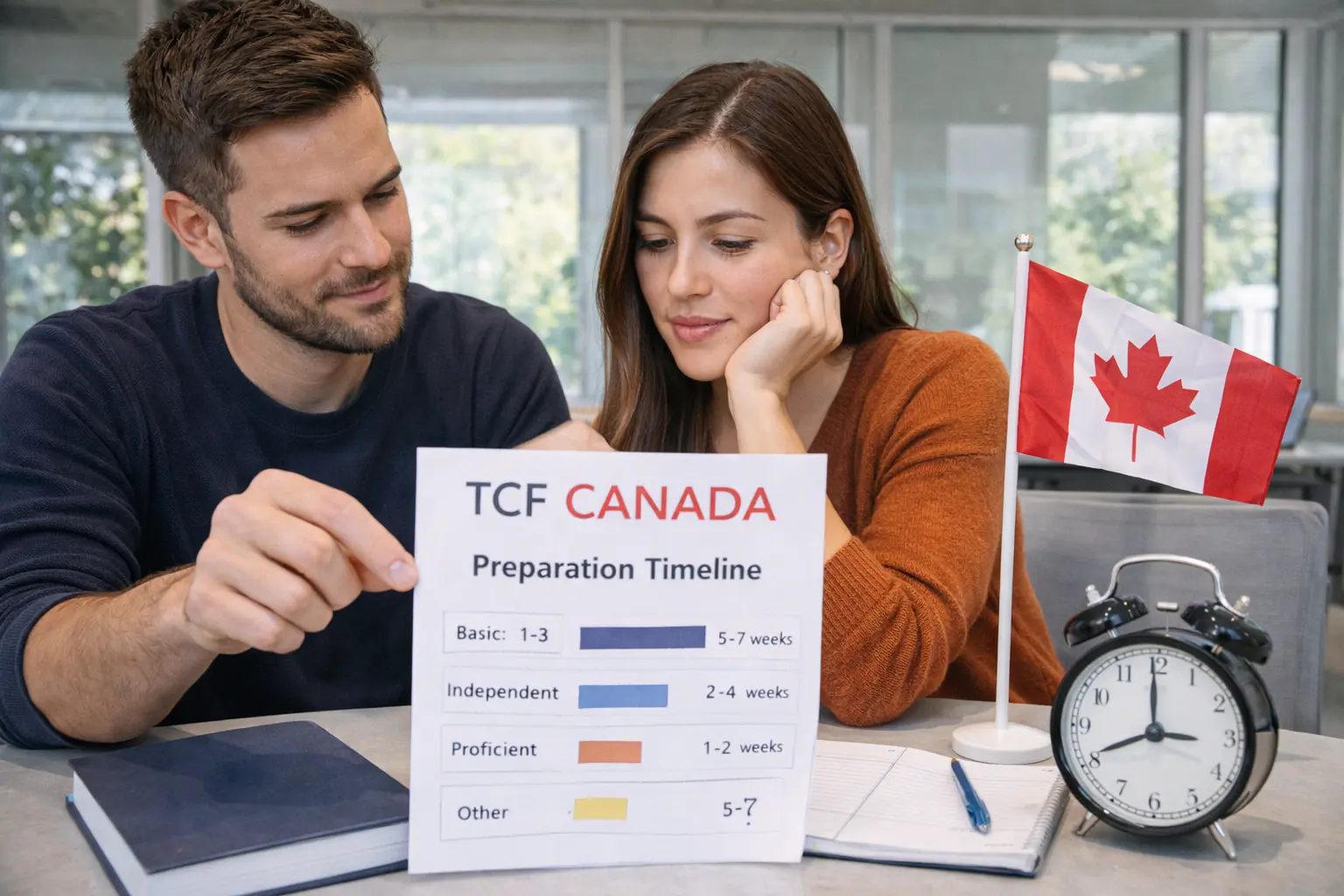
Weekly Overview
| Weeks | Main Focus | Total Time/Week | Key Activities |
|---|---|---|---|
| 1–2 | Assess starting level + foundations | 10h | Free level tests, identify gaps, start daily listening/reading |
| 3–4 | Comprehension (Listening + Reading intensive) | 12h | Daily podcasts, Le Monde reading, RFI Savoirs exercises |
| 5–6 | Writing | 14h | Daily WriteStreak, practice tasks, self-editing |
| 7–8 | Speaking | 14h | HelloTalk 3–4×/week, Discord voice, daily audio selfie |
| 9–10 | Integration of all 4 skills | 16h | Full timed mock tests, error correction, revision |
| 11 | Final simulations | 18h | 1 full mock test every 2 days under exam conditions |
| 12 | Rest + light revision | 8h | Vocabulary review, light listening, prioritize mental rest |
A Typical Day (Week 5 Example — Intensive Phase)
- 6:00–6:45: France Culture podcast during breakfast (45 min)
- 7:00–8:00: commute = RFI news podcast (if applicable)
- 12:30–13:00: lunch break = 2 Le Monde articles (30 min)
- 19:00–19:45: writing practice (TCF Task 1) (45 min)
- 20:00–20:30: HelloTalk conversation (30 min)
- 21:00–21:10: daily audio selfie (10 min)
- DAILY TOTAL: ~3 hours (spread out = manageable)
Fatal Mistakes to Avoid When You’re on a Tight Budget
Mistake #1: Buying “Comfort” Materials Out of Fear
Symptom: “Everyone recommends this 80 CAD book—I must buy it or I’ll fail.”
Reality: About 90% of paid-book content exists online for free in different formats. A paid book adds convenience (everything in one place), not unique knowledge.
Fix: Use free resources for 8–10 weeks first. Only buy something if a specific gap remains (for example, no reliable mock tests).
Mistake #2: Skipping Feedback for Writing/Speaking
Trap: “If I write and speak a lot, I’ll improve naturally.”
Problem: Without external feedback, you reinforce mistakes instead of correcting them. Bad practice becomes permanent.
Free fix: r/WriteStreak for writing + HelloTalk/Discord for speaking = essential free feedback loop.
Mistake #3: Resource Overload (“Collector Syndrome”)
Symptom: Download 15 apps, join 20 sites, follow 30 YouTube channels… then use each for 5 minutes and quit.
Problem: No deep mastery → superficial progress.
Fix: Choose 2–3 resources per skill maximum and use them intensely for 12 weeks. Example: Listening = RFI Savoirs + France Culture. Reading = Le Monde + Bonjour de France.
Real Success Stories with a $0 Prep Budget
Youssef, 24, Tunis (the story from the intro):
- Prep budget: 0 CAD
- Resources: RFI Savoirs, free Le Monde, r/WriteStreak, HelloTalk, France Culture
- Duration: 12 weeks, ~2h/day
- Result: NCLC 8-8-8-7
- CRS: 438 → ITA via francophone draw 5 weeks after profile creation
Amina, 28, Casablanca:
- Budget: 85 CAD (used TCF book + 2 Italki writing sessions)
- Free tools: TV5MONDE, “French Learning” Discord, Project Gutenberg, public library
- Duration: 16 weeks (~1.5h/day)
- Result: NCLC 7-8-7-7 (enough for her PNP pathway)
- Quote: “The 85 CAD only went to mock tests and two targeted writing corrections. Everything else was free.”
Free Resources — Organized Master List
Conclusion: Limited Budget Is a Constraint You Can Beat—Not a Wall
Youssef’s story proves a reality most “prep marketing” rarely emphasizes: you can hit NCLC 8 on TCF Canada with 0 CAD in prep spending if you combine three ingredients: (1) daily discipline (2 hours/day × 90 days, non-negotiable), (2) a method (the right free resources used consistently—not scattered), and (3) initiative (finding partners on HelloTalk, posting on WriteStreak, joining Discord voice rooms).
The difference between a candidate who spends 0 CAD and reaches NCLC 8, and a candidate who spends 2,000 CAD and reaches NCLC 8.3 is often small (about 0.3 of a level). For many profiles, that gap doesn’t justify the cost—especially when those funds could instead cover immigration fees, settlement money, or relocation costs.
A limited budget is not an excuse to give up on Canada. It’s a constraint that can force you into the exact habits that drive success: strategic thinking, discipline, and consistent practice. Those traits don’t just produce a strong TCF score—they also support immigration success and integration after arrival.
Your motivation and consistency are worth more than expensive courses. Use the free resources strategically. Reach NCLC 8+. Immigrate to Canada. Prove that language excellence is not reserved for the wealthy. 🇨🇦
* * *
Frequently Asked Questions
Yes. With structured planning, daily discipline (around 2 hours per day for 12 weeks), and consistent use of high-quality free resources such as RFI Savoirs, Le Monde, r/WriteStreak, and HelloTalk, many candidates can realistically reach NCLC 8 without paying for courses or premium materials.
Writing is typically the most challenging skill to prepare for free because it requires external correction. However, peer-correction communities like r/WriteStreak, language exchange platforms, and free grammar tools such as LanguageTool and BonPatron can significantly reduce this difficulty.
The highest return on investment usually comes from purchasing one official TCF practice book and booking a few targeted writing or speaking feedback sessions with a qualified tutor. These focused corrections help address specific weaknesses while keeping most of your preparation free.
Laissez un commentaire
Votreadresse email ne sera pas publie. Les champs obligatoires sont marque avec *

 TCF Canada Hub
0 Commentaires
aucun commentaire
Soyez le premier a partager votre avis !