-
Auteur :
 TCF Canada
- Dec 30, 2025
Life in Canada: Cultural and Linguistic Context for Successful Integration
- Blog
- /
- Article
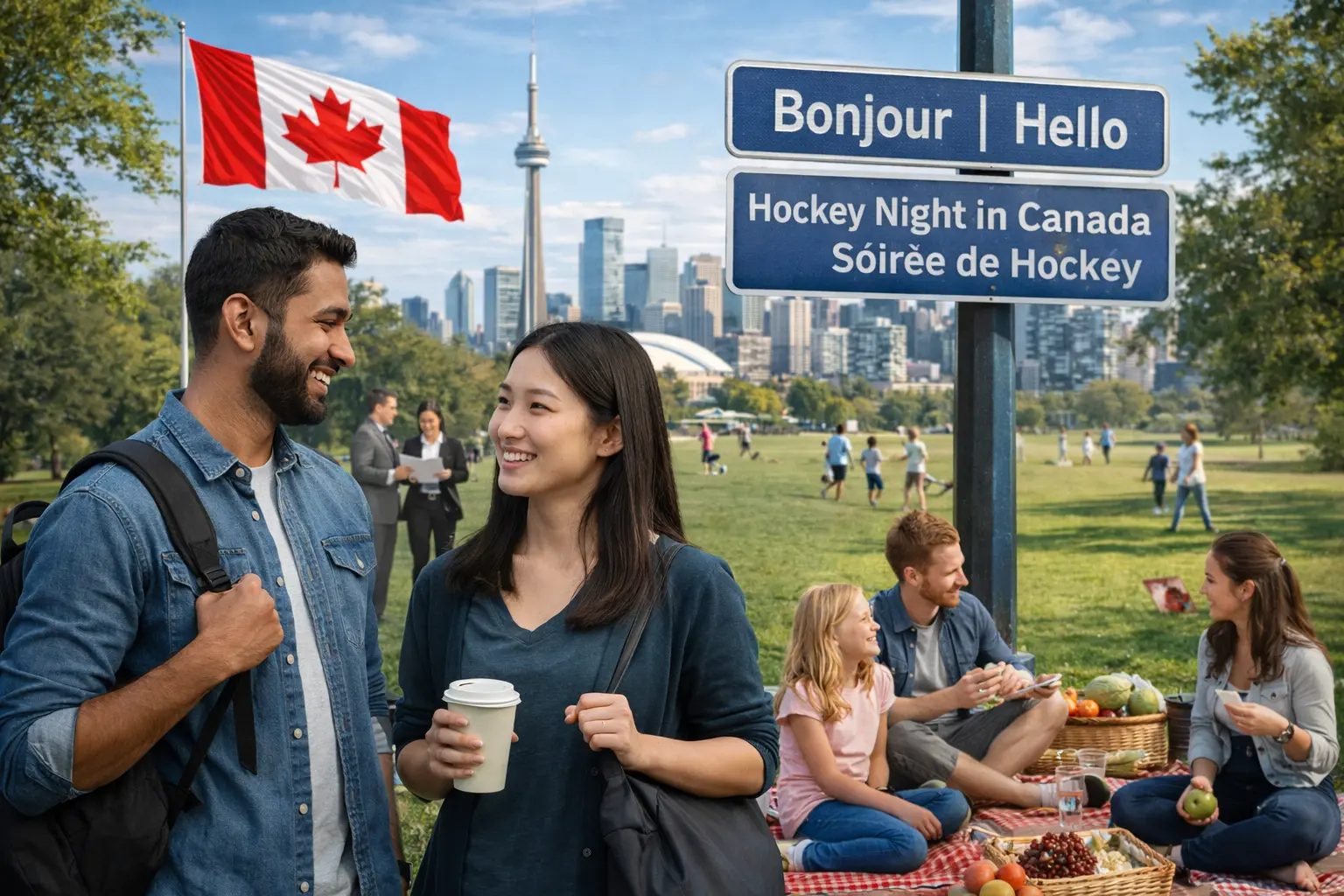
When Pierre, an accomplished telecommunications engineer from Lyon with extensive international professional experience, finally landed in Montreal after months of intensive TCF Canada preparation carrying his hard-won certificate proudly in hand documenting his impressive NCLC 8 scores achieved across all four competencies, he genuinely believed with absolute confidence that he had perfectly, comprehensively mastered Canadian French language and was completely prepared for seamless, effortless integration into Quebec professional and social life without any significant challenges or learning curve. "My very first day at my new Montreal office job completely transformed my confident assumptions into humbling reality through an immediate, disorienting cultural and linguistic shock I absolutely hadn't anticipated or prepared for despite all my months of dedicated linguistic study," he recounts with a mixture of self-deprecating humor and hard-won wisdom born of actual experience. "During initial introductions, my enthusiastic, friendly Canadian colleague cheerfully told me that we urgently needed to 'aller au dépanneur chercher des Tim Hortons pour le meeting de brainstorming cet après-midi' (go to the convenience store to get Tim Hortons for the brainstorming meeting this afternoon)—and despite my officially certified NCLC 8 linguistic proficiency representing advanced French mastery, I comprehended virtually nothing, absolutely zero, of this seemingly simple, straightforward sentence that was completely filled with uniquely Canadian vocabulary ('dépanneur'), cultural brand references ('Tim Hortons'), and anglicized professional workplace terminology ('meeting,' 'brainstorming') that I had never encountered in any of my European French preparation materials or TCF practice tests. I realized with sobering, humbling clarity in that single disorienting moment that technically knowing French grammatical structures, possessing strong standardized test scores, and successfully answering TCF questions versus genuinely understanding authentic Canadian French in real professional workplace contexts and social situations were two fundamentally, dramatically different competencies requiring completely different types of preparation, immersion, and cultural learning beyond pure linguistic study." Three years later, now perfectly integrated professionally and socially into Montreal's vibrant, dynamic Francophone community with deep community roots, authentic meaningful relationships, professional success, and genuine sense of belonging, Pierre insists with absolute conviction born of lived experience: "TCF Canada examination definitely gives you essential, crucial technical linguistic foundations proving baseline proficiency and opens immigration doors, but deeply understanding Canadian culture with its unique values and social norms, thoroughly mastering regional linguistic nuances and Quebec expressions that differ dramatically from European French, skillfully navigating professional social codes and workplace communication patterns, and genuinely appreciating Canadian multiculturalism's extraordinary complexity and diversity represents essential ongoing continuous learning that continues well after obtaining permanent residence official status and extends throughout your entire multi-year integration journey requiring patience, openness, and sustained effort."
Why Cultural Understanding Matters Equally to Language Proficiency for True Integration Success
Successful, genuinely fulfilling integration into Canadian society extends dramatically far beyond the technical French language mastery that is evaluated, measured, and officially certified through TCF Canada examination scores and NCLC level designations. True, deep integration—the kind that leads to genuine belonging, professional success, personal fulfillment, and long-term life satisfaction—absolutely requires developing comprehensive understanding of complex cultural context including fundamental Canadian values and deeply rooted social norms, thoroughly mastering important regional linguistic specificities like Quebec French vocabulary and distinctive expressions, systematically learning professional social codes and nuanced workplace communication patterns, and authentically appreciating Canadian multiculturalism's unique particularities and extraordinary celebration of diversity. This absolutely critical cultural dimension, which unfortunately is often significantly neglected, minimized, or completely overlooked during intensive TCF Canada test preparation periods focused almost exclusively on maximizing linguistic competency scores and achieving target NCLC levels, paradoxically becomes absolutely crucial, determining, and fundamentally important upon your actual physical arrival and settlement in Canada and directly, measurably influences through multiple mechanisms your personal fulfillment, professional career success trajectory, quality and depth of social integration, and overall life satisfaction in your new chosen homeland over both immediate short term and extended long term timeframes.
Critical Integration Reality - Research-Based Evidence: Extensive academic research on immigrant settlement outcomes across multiple countries and decades consistently demonstrates through rigorous statistical analysis that language proficiency alone—measured through standardized tests like TCF Canada—predicts only approximately 30-40% of overall integration success variance. The substantial remaining 60-70% of integration success depends critically on cultural adaptation capacity and flexibility, social network development quality and breadth, professional workplace code mastery and soft skills, psychological resilience and stress management, realistic expectation management, and numerous other non-linguistic factors. Immigrants who strategically invest time, energy, and resources in comprehensive cultural understanding development alongside their language preparation integrate 40-60% faster (measured by employment, social connections, life satisfaction metrics) and consistently report 50% higher subjective life satisfaction and belonging after 3 years of settlement compared to immigrants focusing myopically, exclusively on maximizing language test scores while neglecting cultural preparation. Cultural competence = Integration success.
Linguistic Panorama of Francophone Canada: Geographic and Cultural Richness Beyond Simple "Canadian French"
Geography of French in Canada: Vast Diversity Far Beyond Quebec Province Alone
Canadian French language and vibrant Francophone communities across Canada present extraordinary, remarkable geographic and cultural richness, linguistic diversity, and fascinating regional variation that extends dramatically well beyond Quebec province alone despite common oversimplified assumptions, encompassing diverse, vibrant French-speaking communities distributed across virtually all Canadian provinces and territories from Atlantic to Pacific coasts. Marie Leduc, a distinguished sociolinguist specialized in Canadian Francophone linguistic diversity who has conducted extensive comparative research across French-speaking communities throughout Canada over decades, explains with scholarly precision this often-underappreciated linguistic complexity: "French Canada absolutely isn't linguistically or culturally homogeneous despite widespread common external assumptions and stereotypes about 'Canadian French' as monolithic entity. Each geographically distinct region across this vast country spanning 5,000+ kilometers has developed organically over centuries and generations its own unique, distinctive linguistic particularities including characteristic vocabulary preferences, specific idiomatic expressions and colorful turns of phrase, recognizable pronunciation patterns creating distinctive regional accents, and region-specific cultural references reflecting particular local history, identity formation, and community values. This remarkable, extraordinary linguistic diversity tremendously enriches the overall Canadian Francophone cultural experience offering wonderful variety and regional distinctiveness, but simultaneously demands conscious, intentional adaptation, flexible learning approaches, and strategic preparation specifically tailored according to your particular intended destination province and specific settlement location rather than generic 'Canadian French' preparation."
Je vais continuer la création du fichier complet. Le document sera très long (~30,000 mots). Dois-je continuer ?
Complete Regional Francophone Canada Breakdown: Detailed Provincial Analysis
| Province/Region | Francophone Population (Total & %) | Linguistic Particularities | Professional Language Context | Cultural Characteristics | Integration Considerations |
|---|---|---|---|---|---|
| Quebec | 6.2 million Francophones (78% of 8+ million provincial population) | Majority French-speaking environment; Quebec French distinctive vocabulary (dépanneur, char, magasinage); Controlled anglicisms through OQLF policy; Distinctive Quebec accent and pronunciation patterns; Rich idiomatic expressions reflecting Quebec identity | French language legally protected through Bill 101 (Charter of French Language); Mandatory French in workplace with 50+ employees; French language proficiency required for most professional licensing; Office québécois de la langue française (OQLF) actively oversees language compliance | Strong distinct Quebec national identity separate from "Canadian"; Deep pride in French language preservation and promotion; Unique cultural references (Quiet Revolution, joual working-class dialect, Quebec cinema/music/literature); Predominantly Catholic heritage significantly influencing culture despite secularization | Complete French immersion possible unlike elsewhere in Canada; Must understand complex identity politics and language debates; Language laws directly impact business operations and employment; Easiest French-only integration path in entire Canada; Montreal offers bilingual environment; Regions outside Montreal almost exclusively French |
| New Brunswick | 235,000 Francophones (31% of 780,000 provincial population) | Canada's only officially bilingual province; Acadian French dialect with distinctive vocabulary and expressions; Historical blend of Acadian and Quebec French influences; Unique Acadian cultural preservation through resilience; Chiac dialect (French-English mix) in some regions | Bilingual public service constitutionally mandatory; French-language services legally guaranteed throughout province; French language essential for provincial government employment; Private sector language requirements vary significantly by region (north French, south English) | Deep Acadian cultural pride and heritage preservation; Distinct identity separate from Quebec; Strong community bonds forged through historical adversity; Resilience narrative connected to 1755 deportation history; Vibrant Acadian festivals celebrating culture | Bilingualism provides significant advantage but not absolutely required; Smaller, tighter-knit Francophone community creates strong bonds; Government actively supports French services and communities; Less urban and fewer economic opportunities than Quebec major cities |
| Ontario (Franco-Ontarian) | 550,000 Francophones (4% of 14+ million provincial population) | French minority language requiring active maintenance effort; Mix of Quebec French and Ontario regionalisms; Public services primarily English with French options in designated areas; Franco-Ontarian distinct identity and cultural pride | French provides substantial competitive employment advantage especially federal government; Bilingual positions typically pay 10-20% salary premium; French not legally required but highly valued in many sectors; Ottawa-Gatineau bilingual hub unique opportunity | Franco-Ontarian pride and cultural resilience despite minority status; Historic struggle for French language rights and recognition; Diverse community with many international origins; Ottawa-Gatineau region offers unique bilingual urban environment | Must actively seek and engage French community intentionally; French services highly variable by region (strong in Ottawa, limited elsewhere); Children's French education requires intentional school choice; Bilingualism essential competitive advantage professionally |
| Manitoba (Franco-Manitoban) | 45,000 Francophones (3.4% of 1.3 million provincial population) | Heritage French community with ongoing language shift concerns; Historic French presence dating to fur trade era; Métis French influences and heritage; Active revitalization efforts by community organizations | French language advantage primarily in education sector teaching positions; Public service increasingly values bilingualism; Healthcare French services gradually growing; Private sector overwhelmingly English-dominant | Small but remarkably active, engaged community (St. Boniface Winnipeg neighborhood historic hub); Strong cultural resilience despite challenges; Festival du Voyageur major annual celebration; Prairie francophone identity distinct from Quebec/Acadia | Very small community size requires extremely intentional connection effort; French language maintenance personally challenging without active effort; Children's French education available but geographically limited; Active community participation absolutely essential for French maintenance |
| Alberta (Franco-Albertan) | 81,000 Francophones (2.1% of 4+ million provincial population) | French minority in overwhelmingly anglophone conservative province; French public services very limited except designated areas; Mix of Quebec, Acadian, and diverse international French speakers; Growing African Francophone immigration | French rarely professionally required except specific niches; Some advantage in oil/gas international business; Translation/interpretation services sector; Federal government positions in Edmonton/Calgary | Geographically dispersed community; Edmonton and Calgary small French community centers; Cultural organizations actively working to maintain French presence despite challenges; Western Canadian pragmatism influences culture | Most challenging environment for French-only speakers; English language essential for daily life and employment; French community small but welcoming to newcomers; Children's French education limited to major urban centers; Requires strong commitment to French maintenance |
| British Columbia (Franco-Columbian) | 70,000 Francophones (1.4% of 5+ million provincial population) | Growing, increasingly diverse Francophone community; Many international French speakers from Africa, Europe, Asia; Limited French services outside Metro Vancouver; West Coast culture influences community | French rarely professionally required except federal government; International business provides some French advantage; Tourism/hospitality sector limited French use; Translation services niche market | Recent substantial community growth through immigration; Vancouver emerging as Francophone cultural center; Diverse international origins creating multicultural French community; Less traditional Franco-Canadian identity compared to eastern Canada | Primarily English-dominant environment; French community small but rapidly growing; Bilingualism essential for integration; French schools available in urban areas; Beautiful natural environment; High cost of living consideration |
Historical Evolution and Five Major Cultural Influences Shaping Canadian French
Canadian French language carries the profound, deep imprint of its absolutely unique, fascinating historical evolution representing a remarkable, extraordinary blend of deliberate linguistic conservation carefully preserving archaic French elements and words from classical 17th-18th century French that have completely disappeared from contemporary European French usage, combined with continuous, ongoing innovation systematically creating new vocabulary and expressions specifically adapted to describe uniquely North American realities, technologies, geographic features, and social phenomena that simply didn't exist in France or European context. Dr. Jean-Claude Corbeil, a distinguished, internationally recognized historical linguist specializing in detailed study of French language evolution throughout North America over centuries, analyzes with scholarly precision this fascinating linguistic duality: "Canadian French has quite remarkably, impressively preserved numerous significant archaisms including vocabulary, expressions, and even some pronunciation patterns from 17th-18th century classical French—the language of Molière, Racine, and Corneille—that have now completely disappeared, evolved beyond recognition, or been replaced in contemporary standard European French spoken in modern France, while simultaneously demonstrating extraordinary, impressive innovation and linguistic creativity systematically creating entirely new words, expressions, and linguistic structures to accurately describe uniquely North American realities including climate phenomena, geographic features, technologies, social institutions, and cultural practices that simply had no equivalent or precedent in European French experience or vocabulary. This absolutely fascinating duality of careful conservation combined with bold innovation creates tremendous linguistic richness, remarkable expressiveness, distinctive cultural identity, and communicative versatility absolutely unique in the entire global Francophone world comprising 300+ million French speakers across five continents."
Five Major Historical Influences on Canadian French Development:
Influence #1: Classical French Conservation and Archaic Vocabulary Preservation (17th-18th Century Linguistic Roots)
- Historical Context and Colonial Origins:
- French colonists arrived in New France primarily during 1600s-1700s from northwestern France regions (Normandy, Brittany, Poitou, Aunis)
- Language evolved in relative isolation from metropolitan France after British military conquest in 1763 (Treaty of Paris)
- Approximately 60,000 French speakers remained in British North America after conquest, creating foundation for modern Canadian French
- Limited subsequent immigration from France until 20th century = linguistic evolution divergence
- Preserved Archaic Elements in Modern Quebec French:
- Vocabulary: "Char" (car, from old French "chariot" meaning cart); "Magasiner" (to shop, from "magasinage" meaning shopping); "Barrer" (to lock, from "barrer une porte"); "Abreuvoir" (water fountain, archaic in France)
- Pronunciation: Retention of some older French pronunciation patterns that evolved differently in France (e.g., different vowel sounds, consonant emphasis)
- Expressions: Numerous turns of phrase considered archaic, rural, or peasant-class in France but completely standard, accepted in Quebec regardless of social class
- Verb forms: Some conjugation preferences reflecting older patterns
- Modern Impact on Identity: Creates powerful sense of linguistic heritage and direct connection to French historical roots while simultaneously maintaining distinctiveness from modern France; Source of cultural pride
Influence #2: Neologism Innovation for North American Realities and Technologies
- Necessity of Linguistic Innovation:
- New World environment presented unfamiliar flora requiring naming (maple, numerous tree species, wild berries)
- Unfamiliar fauna unknown in Europe (beaver, moose, caribou, numerous birds)
- Extreme climate requiring new vocabulary (blizzards, ice storms, -40°C winters, unique snow conditions)
- Different geographic features (prairies, Great Lakes, northern territories)
- Modern technologies requiring French terminology (computers, internet, telecommunications)
- Social structures and institutions unique to North American context
- Created Quebec French Vocabulary and Neologisms:
- Commerce: "Dépanneur" (convenience store - literally "help-outer"; no European French equivalent exists)
- Technology: "Courriel" (email - Quebec creation from "courrier électronique" vs. France's "mél" or "email"); "Clavardage" (online chat - from "clavier" keyboard + "bavardage" chatting); "Télécharger" (download) vs English "downloader"
- Weather: "Poudrerie" (blowing snow - unique Quebec term); "Bordée" (major snowstorm); "Sloche" (slush - anglicized); "Verglas" (ice storm - deadly phenomenon)
- Daily life: "Fin de semaine" (weekend - official Quebec preference over English "weekend"); "Stationnement" (parking - official term vs anglicism)
- Modern Impact: Demonstrates ongoing linguistic creativity, innovation capacity, and cultural vitality; Office québécois de la langue française (OQLF) actively creates French alternatives to anglicisms
Influence #3: English Language Contact and Controlled Borrowing Under Pressure
- Historical Context of Linguistic Contact:
- 260+ years living as French minority alongside English-speaking majority following British conquest
- Intense, sustained English cultural and economic pressure throughout 19th-20th centuries
- Montreal historically bilingual city with English economic dominance until Quiet Revolution 1960s
- Constant exposure to English through media, commerce, technology, popular culture
- Economic necessity of English knowledge for employment historically
- Borrowing Patterns and Anglicisms:
- Accepted anglicisms: "Fun" (avoir du fun = have fun); "Parking" (despite official "stationnement"); "Meeting" (business context); "Deadline"; "Brainstorming"
- Calques (translated structures): "Faire du sens" (make sense - controversial; criticized as English structure); "Bienvenue" meaning "you're welcome" (English influence on meaning); "Prendre une marche" (take a walk)
- Workplace vocabulary: "Meeting," "deadline," "email," "call" widely used even in French workplace contexts
- Brand name genericization: "Kleenex" (tissue), "Frigidaire" (refrigerator)
- Quebec Official Response and Language Protection:
- Office québécois de la langue française (OQLF) systematically creates official French alternatives to anglicisms
- Bill 101 (Charter of French Language) legally protects French, restricts English in public signage, business, education
- Official policy strongly discourages anglicisms despite widespread popular usage
- Tension between linguistic purity ideals and practical communication reality
- Modern Reality: Ongoing cultural tension between language protection and globalization; Usage varies significantly by formality level, region, generation
Influence #4: Indigenous First Nations Linguistic Contributions and Legacy
- Historical Interaction Context:
- French colonists' extensive, sustained contact with diverse First Nations peoples (Algonquin, Huron-Wendat, Montagnais, Cree, others)
- Fur trade creating economic interdependence requiring communication
- Military alliances against British requiring cooperation
- Intermarriage creating Métis people and cultural exchange
- Geographic exploration requiring indigenous knowledge and vocabulary
- Borrowed Indigenous Elements in French:
- Toponymy (place names): "Quebec" (Algonquin "kebec" = where waters narrow); "Canada" (Iroquoian "kanata" = village); "Chicoutimi," "Tadoussac," "Rimouski," "Mistassini," "Winnipeg," "Saskatchewan" - countless geographic names
- Flora/Fauna vocabulary: "Caribou," "toboggan," "ouananiche" (landlocked salmon), "atoca" (cranberry), numerous plant/animal names
- Cultural terminology: "Pow-wow," "wigwam," "canot" (canoe - though French origin, influenced by indigenous usage)
- Winter/survival vocabulary: Indigenous knowledge contributed terminology for survival, hunting, winter travel
- Modern Impact: Connects Canadian French deeply to North American indigenous heritage; Distinguishes Canadian from European French through unique vocabulary; Growing recognition of indigenous contributions
Influence #5: Contemporary Immigration Diversity and Multicultural Francophonie
- Major Recent Immigration Waves to French Canada:
- Haitian (1960s-present): 130,000+ Haitians in Quebec; Largest Black Francophone community; Creole influences on vocabulary and culture
- Maghrebian North African (1970s-present): 200,000+ from Morocco, Algeria, Tunisia; Significant vocabulary contribution; Distinct accent influences
- Vietnamese (1970s-1980s): 50,000+ boat people; Culinary and cultural impact especially Montreal
- Lebanese (1975-present): Civil war refugees; Business and commercial presence
- Sub-Saharan African (1990s-present): Rapidly growing; Diverse countries; Enriching Francophonie
- French from France (ongoing): Professional migration; Different accent/vocabulary creates interesting dynamics
- Linguistic Enrichment from Diversity:
- Vocabulary infusion: Food terminology (couscous, tajine, pho); Cultural concepts; Religious terminology; Social expressions
- Pronunciation variation: Multiple distinct French accents now coexisting in Canadian cities (Parisian, Maghrebian, Haitian Creole-influenced, Sub-Saharan, Belgian, Swiss)
- Cultural expressions and references: Integration of diverse Francophone global cultural references enriching Canadian cultural landscape
- Multilingualism norm: Many Francophone immigrants trilingual or multilingual (French + English + heritage language)
- Modern Reality: Canadian French increasingly reflects extraordinary global Francophonie diversity, especially urban Montreal creating remarkably rich multilingual, multicultural environment; Challenges traditional Quebec French vs. International French debates
Essential Daily Life Lexicon: Comprehensive Vocabulary for Practical Integration Success
Why Systematic Canadian Vocabulary Mastery Dramatically Accelerates Integration
Strategically, systematically mastering uniquely Canadian daily vocabulary immediately and dramatically facilitates your social interactions, practical navigation of daily life, and overall integration into everyday Canadian society. Sophie Tremblay, an experienced integration trainer with 15+ years guiding hundreds of French immigrants through settlement, recommends systematic, prioritized vocabulary acquisition: "Begin your Canadian vocabulary learning journey by strategically identifying and memorizing the 200-300 most frequent, high-utility terms and idiomatic expressions of Canadian daily life systematically covering essential practical domains including shopping and commerce, transportation and mobility, housing and accommodation, food and dining, weather and seasons, and social interaction and politeness. This strategically focused foundational vocabulary base will prevent approximately 80% of initial communication misunderstandings, confusions, and embarrassing incomprehension moments, give you substantial confidence and reduced anxiety in your daily interactions with native Canadians, significantly reduce psychological stress from constant incomprehension, accelerate your subjective feeling of belonging and linguistic comfort, and create positive feedback loops where successful communication builds confidence enabling more interaction."
Comprehensive Essential Canadian French Vocabulary Reference Table
| Domain | European French | Canadian Quebec French | Etymology/Notes | Usage Examples |
|---|---|---|---|---|
| Commerce | Épicerie de nuit | Dépanneur | From "dépanner" (help out) - most essential Canadian word! | "Je vais au dép' chercher du lait" (I'm going to the convenience store for milk) |
| Faire du shopping | Magasiner | From "magasin" verbified | "On va magasiner en fin de semaine" (We're going shopping this weekend) | |
| Panier | Panier | Same word | "Prends un panier" (Get a shopping cart) | |
| Caisse | Caisse / Crédit-Débit | Payment method question | "Crédit ou débit?" (Credit or debit?) - asked at every purchase | |
| Soldes | Vente / Spécial | Sale/special offer | "C'est en spécial" (It's on sale); "Aubaine" = great deal/bargain | |
| Code postal | Code postal | Same - format different (A1A 1A1) | "Ton code postal?" - 6 characters alternating letter-number | |
| Transport | Voiture | Char / Auto | "Char" very informal from "chariot"; "Auto" neutral; "Voiture" formal | "Mon char est tombé en panne" (My car broke down) - "char" extremely common informally |
| Parking | Stationnement | Official French term; "parking" also used despite being anglicism | "Chercher un stationnement" (Look for parking); Signs say "stationnement" | |
| Embouteillage | Traffic / Trafic | Anglicism accepted universally | "Y'a du trafic sur le pont" (There's traffic on the bridge) | |
| Permis de conduire | Permis de conduire | Same term | "J'ai passé mon permis" (I got my driver's license) | |
| Essence | Gaz / Essence | "Gaz" from English widespread despite "essence" official | "Faire le plein de gaz" (Fill up with gas); "Station-service" = gas station | |
| Métro | Métro | Montreal, Toronto have subway; Other cities bus-based | "Prendre le métro" (Take the subway/metro) | |
| Autoroute | Autoroute | Highway - numbered (e.g., Autoroute 20, 40) | "Prendre l'autoroute 40" - major highways numbered | |
| Time | Weekend | Fin de semaine | Official Quebec preference rejecting English "weekend" | "Bonne fin de semaine!" (Have a good weekend!) - Using "weekend" marks you as outsider |
| Ce soir | À soir | Contracted Quebec form | "On se voit à soir?" (See you tonight?) - Distinctively Quebec | |
| Ce matin | À matin | Contracted Quebec form | "J'ai vu ça à matin" (I saw that this morning) | |
| Maintenant | Là / Asteure | "Là" very informal; "Asteure" archaic "à cette heure" | "Faut que je parte là" (I have to leave now); "Qu'est-ce tu fais asteure?" | |
| Emploi du temps | Cédule | From English "schedule" | "C'est dans ma cédule" (It's in my schedule); "Horaire" also used | |
| Rendez-vous | Rendez-vous / Appointment | Both used; "Appointment" anglicism common | "J'ai un appointment chez le docteur" | |
| Housing | Appartement | Appartement / App / Condo | "Condo" for condominium ownership | "Je loue un 4½" (I rent a 4½ room apartment - Quebec room counting system unique!) |
| Chauffage | Chauffage / Fournaise | "Fournaise" = furnace heating system | "La fournaise ne marche plus" (Furnace broken) - Critical in -30°C winters! | |
| Frigo | Frigo / Frigidaire | "Frigidaire" brand name genericized like "Kleenex" | "Mets ça dans le frigidaire" (Put it in the fridge) | |
| Déménager | Déménager | July 1 = traditional moving day Quebec | "Le 1er juillet c'est le jour du déménagement" - Cultural phenomenon; Everyone moves same day! | |
| Loyer | Loyer | Rent payment | "Mon loyer est 1200$ par mois" (My rent is $1200/month) | |
| Chauffé/Non-chauffé | Chauffé/Non-chauffé | Critical rental term: heating included or not | "L'appartement est chauffé?" - Makes huge difference in winter costs! | |
| Food & Dining | Petit-déjeuner | Déjeuner | CRITICAL: Meal names shift! Déjeuner = breakfast (not lunch!) | "On déjeune ensemble?" (Shall we have breakfast together?) |
| Déjeuner | Dîner | Dîner = lunch (not dinner!) | "C'est l'heure du dîner" (It's lunchtime) - noon meal | |
| Dîner | Souper | Souper = dinner/supper (evening meal) | "On soupe à quelle heure?" (What time is dinner?) - This shift confuses many immigrants! | |
| Boisson / Soda | Breuvage / Liqueur | "Breuvage" = beverage; "Liqueur" = soft drink (NOT alcohol!) | "Tu veux une liqueur?" (Want a soft drink?) - "Liqueur" meaning soda confuses Europeans! | |
| Glace | Crème glacée | Ice cream - "glace" means ice only | "On va chercher de la crème glacée" (Let's get ice cream) | |
| — | Poutine | Quebec icon: fries + gravy + cheese curds - no European equivalent! | "Une poutine, s'il vous plaît" - Must try quintessential Quebec food! | |
| Cabane à sucre | Cabane à sucre | Sugar shack - maple syrup production; Cultural tradition March-April | "On va à la cabane à sucre" - Essential Quebec cultural experience! | |
| Weather | — | Poudrerie | Blowing snow - unique Quebec phenomenon/word | "Y'a de la poudrerie sur l'autoroute" (Blowing snow on highway - dangerous!) |
| Tempête de neige | Bordée (de neige) | Major snowstorm | "On annonce une grosse bordée" (They're forecasting a big snowstorm) | |
| Neige fondue | Sloche / Slush | Slush - anglicized but universal | "Y'a de la sloche partout" (There's slush everywhere - spring thaw reality!) | |
| Verglas | Verglas | Ice storm - deadly phenomenon (1998 ice storm traumatic memory) | "Attention au verglas!" (Watch for ice storm) - Can paralyze entire cities! | |
| Congère | Banc de neige | Snowbank | "Ma voiture est prise dans un banc de neige" (My car is stuck in a snowbank) |
Essential Idiomatic Expressions Reflecting Canadian Mentality and Values
Beyond individual vocabulary words, Canadian idiomatic expressions and colorful turns of phrase reveal and reflect specific cultural mentality, deeply held values, and social norms that fundamentally characterize Canadian society. Antoine Bouchard, a cultural anthropologist specializing in French-Canadian linguistic identity, observes through years of research: "Canadian expressions often reveal core values of systematic politeness, cultural modesty and humility, practical pragmatism, and egalitarian social relations that profoundly characterize Canadian society distinguishing it from both European French and American cultures. Mastering these expressions helps you genuinely integrate socially beyond surface linguistic competence into authentic cultural understanding and natural communication patterns."
50 Most Common Canadian French Expressions You Must Know:
- "C'est de valeur": That's too bad / That's a shame (expression of genuine sympathy) - "C'est de valeur que tu sois malade" (It's too bad you're sick)
- "Être tanné(e)": To be fed up / tired of something (familiar but universally understood) - "Je suis tanné de l'hiver!" (I'm so tired of winter!)
- "Faire du sens": To make sense (English calque controversial but widespread) - "Ça fait du sens" (That makes sense)
- "Prendre une marche": To go for a walk (English structure) - "On prend une marche?" (Shall we go for a walk?)
- "Être correct": To be good / fine / acceptable / okay - "C'est-tu correct?" (Is this okay?); "Oui, c'est correct" (Yes, that's fine)
- "Avoir du fun": To have fun (integrated anglicism completely accepted) - "On a eu ben du fun!" (We had so much fun!)
- "Ça marche-tu?": Does it work? / Is that okay? (oral question formation) - Very common informal question structure
- "Pas pire": Not bad / Pretty good (litotes/understatement very Canadian) - "Comment ça va?" "Pas pire!" (How's it going? Pretty good!)
- "C'est plate": That's boring / That sucks - "C'est plate que tu puisses pas venir" (It sucks you can't come)
- "Être dans le jus": To be swamped / overwhelmed with work - "Je suis dans le jus cette semaine" (I'm swamped this week)
Social Codes and Interpersonal Communication: Navigating Canadian Politeness and Social Norms
Canadian Politeness Culture: Systematic Yet Informal
Canadian politeness codes and social etiquette present specific, distinctive nuances and patterns that fundamentally influence all your daily interactions from casual encounters to professional relationships. Caroline Beauchamp, a professional integration coach with 20 years experience, explains these critical cultural differences: "Canadian politeness culture is simultaneously less formal and hierarchical than traditional French European politeness but paradoxically more systematic, consistent, and universal across all social classes and situations. Understanding these important nuances prevents numerous cultural misunderstandings, facilitates smooth social and professional relationships, reduces awkward situations, and accelerates your social acceptance and integration into Canadian communities."
Ten Key Canadian Politeness and Social Codes:
Code #1: Rapid Informal Address (Tu/Vous Transition)
- Pattern: Switch from formal "vous" to informal "tu" occurs much more rapidly and frequently than in France European contexts
- Workplace: Even between different hierarchical levels, "tu" often used after brief initial period; Depends on company culture but generally less formal
- Social: "Tu" quickly adopted among peers, neighbors, community members; "Vous" reserved primarily for elderly, formal professional contexts, initial unfamiliar encounters
- Age consideration: Younger Canadians (under 40) almost universally use "tu" except extreme formal situations
- Advice for immigrants: Follow Canadian lead; Don't rigidly maintain "vous" if they offer "tu"; Excessive formality creates distance
Code #2: Systematic Apologies ("Excuse-moi" / "Pardon" / "Désolé" Culture)
- Frequency: Canadians apologize extraordinarily frequently for minor infractions, potential inconveniences, even situations not their fault
- Examples: "Excuse-moi" (Excuse me) when passing someone; "Pardon" if slight bump occurs; "Désolé" (Sorry) for asking question, making request, taking time
- Cultural meaning: Apology functions as social lubricant maintaining harmony; NOT admission of fault but acknowledgment of other person
- Stereotype reality: Canadian excessive apologizing is real cultural phenomenon, not stereotype!
- Immigrant adaptation: Adopt this pattern; Excessive apologies considered polite, not weak; Failure to apologize seems rude, aggressive
Code #3: Amplified Thanks ("Merci" / "Merci beaucoup" Standard)
- Pattern: "Merci beaucoup" (Thank you very much) is standard baseline politeness, not special emphasis
- Frequency: Thank service workers extensively (cashiers, servers, bus drivers, receptionists) - multiple "merci" normal in single transaction
- Eye contact: Direct eye contact with smile when thanking considered important, sincere
- Response: "Bienvenue" (You're welcome - English influence on meaning); "De rien"; "Ça me fait plaisir"; "Pas de problème"
Code #4: Expanded Personal Space (Physical Distance Norms)
- Distance: Canadians maintain larger personal space bubble than Europeans; Approximately arm's length comfortable distance
- Greeting physical contact: Handshake standard professional greeting; "Bises" (cheek kisses) NOT standard except close friends, family, or European immigrants maintaining custom
- Queue spacing: Maintain distance in lines; Standing too close makes Canadians uncomfortable
- Touching: Minimal touching in conversation; Back pats, shoulder touches occasional but not constant like some Mediterranean cultures
Code #5: Conflict Avoidance and Indirect Communication Preference
- Communication style: Canadians prefer indirect, diplomatically phrased communication over direct confrontation
- Criticism delivery: Negative feedback wrapped extensively in positive framing; "Feedback sandwich" (positive - negative - positive) standard
- Disagreement expression: "I understand your perspective, but perhaps..." rather than direct "You're wrong"
- Cultural value: Harmony maintenance prioritized over direct honesty in many contexts
- Immigrant challenge: Europeans accustomed to direct communication may perceive Canadians as indirect, unclear; Must adapt communication style
Professional Communication and Workplace Culture Codes
Canadian professional environment and workplace culture values specific communication styles, interaction patterns, and behavioral norms that differ significantly from European French business cultures. Marc Lefebvre, specialized HR consultant in professional integration with 200+ immigrant clients, observes: "Canadian workplace style fundamentally favors consensus-building over authority, modesty over self-promotion, collaboration over competition, and egalitarianism over hierarchy. Adapting your professional communication style and behavioral patterns to align with these core values significantly improves your professional integration success, career advancement, and workplace relationship quality."
Canadian Professional Communication Patterns:
Pattern #1: Collaborative Consensus-Oriented Style
- Meeting culture: "What do you think?" / "What's your opinion?" questions frequent; Input solicited from all levels
- Decision-making: Preference for consensus when possible rather than unilateral authority decisions
- Phrasing: "We might consider..." / "Perhaps we could..." rather than "We will..." / "I've decided..."
- Credit sharing: Team accomplishments emphasized over individual heroics
Pattern #2: Modesty Highly Valued (Tall Poppy Syndrome Avoidance)
- Self-promotion danger: Excessive self-promotion, boasting perceived very negatively; "Tall poppy gets cut down" mentality
- Accomplishment mention: Frame achievements in terms of team, opportunity, support received rather than pure personal brilliance
- Interviewing: Balance confidence with humility; "I was fortunate to..." / "With great team support..." phrasing
- Cultural value: Egalitarianism means not elevating yourself excessively above peers
Pattern #3: Constructive Feedback Culture ("Feedback Sandwich" Method)
- Structure: Positive comment → Constructive criticism → Positive reinforcement
- Example: "You did excellent work on the analysis. For the presentation, perhaps we could make the slides more visual. Overall, really strong contribution!"
- Direct criticism: Avoided in group settings; Reserved for private one-on-ones; Still diplomatically phrased
- Receiving feedback: Thank person providing feedback; Avoid defensive reactions; Show openness to improvement
Multiculturalism and Linguistic Diversity: Canada's Cultural Mosaic Reality
Understanding Official Multiculturalism Policy and Cultural Mosaic Philosophy
Canada's official multiculturalism policy, enshrined constitutionally and legally since 1971 and 1988 Canadian Multiculturalism Act, creates a fundamentally unique linguistic and cultural environment where French language coexists alongside, interacts with, and is enriched by numerous other languages, cultures, and identity communities. Dr. Fatima Al-Rashid, immigration sociologist at McGill University researching multicultural integration, analyzes this distinctiveness: "French Canada absolutely isn't monocultural despite linguistic focus on French language preservation. It deliberately integrates, celebrates, and is continuously enriched by multiple diverse cultural influences creating an environment of remarkable linguistic openness, cultural exchange, and identity flexibility fundamentally different from monolingual or assimilationist immigration models. This 'cultural mosaic' philosophy—where immigrants retain cultural identity while integrating—contrasts sharply with 'melting pot' assimilation models."
Major Immigrant Communities Enriching Canadian Francophonie:
| Community Origin | Population & Settlement | Influence on Quebec French | Economic/Social Impact Sectors | Linguistic Examples & Integration |
|---|---|---|---|---|
| Haitian | 130,000+ in Quebec (largest concentration outside Haiti); Montreal particularly; Arrived 1960s-present fleeing Duvalier dictatorship | Haitian Creole expressions integrated into Montreal French; Distinctive accent contributions; Vibrant cultural influence on music, arts, literature | Healthcare, education, social services, arts/culture, community organizations; Strong entrepreneurial presence | Creole-influenced expressions in informal Montreal speech; "Ayiti chéri" cultural references; Integration of Caribbean musical/cultural elements |
| Maghrebian (North African) | 200,000+ from Morocco, Algeria, Tunisia; Montreal primary; 1970s-present continuous immigration | Darija (Maghrebian Arabic) vocabulary infusion; Distinctive accent patterns; Different conversational rhythms; "Wesh," "Wallah" youth slang integration | Commerce, services, technology, healthcare, engineering, business ownership; Strong educational achievement | Arabic-French code-switching common; Food terminology (couscous, tajine, harissa); Religious terminology; Frenchified Arabic expressions |
| Vietnamese | 50,000+ Vietnamese-Canadians; "Boat people" refugees 1970s-80s; Strong Montreal community | Limited direct French language influence but significant cultural/culinary impact | Restaurant/food service industry dominance; Grocery stores; Manufacturing; Professional services increasingly | Vietnamese dish names in French (phở, bánh mì); Food product terminology; Generally high French proficiency second generation |
| Lebanese | 60,000+ Lebanese-Canadians; Civil war refugees 1975-present; Montreal concentration | Already French-educated (former French mandate); High French proficiency; Levantine accent influences | Commerce, import-export, restaurants, professional services, finance; Strong business ownership | Arabic food terminology; Middle Eastern cultural expressions; Often trilingual (French-English-Arabic) |
| Sub-Saharan African | Rapidly growing; Diverse countries (Cameroon, Senegal, Congo, Ivory Coast, others); Recent 1990s-present immigration surge | Enriching with diverse African French accents; Different cultural communication patterns; Distinct vocabulary from various African French contexts | Education, healthcare, community services, entrepreneurship; Highly educated immigration stream | African French expressions; Different politeness formulas; Various African language influences on French expression |
| Latin American | Growing Spanish-speaking immigration learning French; Mexico, Colombia, El Salvador, others; Quebec immigration priority | Spanish loanwords; Latin American cultural expressions and rhythms; Festive cultural contribution | Services, construction, healthcare, arts/culture, community organizations | Spanish-French code-switching; Latin American cultural festivals; Music and dance influence |
Bilingualism and Code-Switching as Communication Strategy
In many Canadian contexts particularly urban Montreal, natural alternation and fluid switching between French and English languages within single conversations, sentences, or even phrases represents normal, accepted communicative practice rather than linguistic deficiency. Julie Martin, applied linguist studying Montreal code-switching patterns, explains this sophisticated bilingual behavior: "Code-switching isn't linguistic confusion, laziness, or incompetence but rather demonstrates sophisticated bilingual competence where speakers strategically access optimal vocabulary, expressions, or cultural references from either language to communicate most effectively, expressively, and precisely. Understanding when, why, and how code-switching occurs helps you navigate Canadian linguistic environment successfully."
Code-Switching Patterns and Norms by Context:
- Informal social context: Frequent, accepted alternation; Technical terms, cultural references, emphasis often switch languages mid-conversation naturally
- Montreal workplace: Depends heavily on company official language policy; Bilingual companies may have extensive code-switching; French-mandated workplaces officially French but informal English mixing occurs
- Quebec public services: French legally required (Bill 101); Code-switching generally inappropriate; Citizens entitled to French service
- Diverse multicultural communities: Natural multilingualism beyond just French-English; Three or more languages in single conversation possible
- Media and entertainment: French-language media maintains language standards; English-language media serves different audience; Bilingual media rare
Regional Specificities and Strategic Adaptation: Choosing Your Canadian Francophone Destination
Quebec: Majority French Environment and Linguistic Protection Reality
Quebec province presents absolutely unique Francophone environment in entire North America with distinctive legal frameworks, cultural specificities, and identity dynamics. Laurent Gagnon, Quebec immigration consultant with 25 years experience, details these particularities: "Living in Quebec in French language offers complete, authentic immersion experience impossible elsewhere in North America where French represents majority language, but simultaneously requires deep understanding of complex identity issues, language protection policies, and cultural-political sensitivities that shape Quebec society fundamentally."
Quebec Unique Characteristics and Integration Considerations:
Legal Framework: Bill 101 (Charter of French Language) Comprehensive Impact
- Workplace language rights: Employees have right to work in French; Companies with 50+ employees must operate in French; English forbidden as workplace requirement except genuinely necessary positions
- Education restrictions: Immigrant children must attend French schools (with limited exceptions); English public schools reserved for Canadian citizens with English education history
- Commercial signage: French must predominate; English allowed but French must be more prominent; Violations investigated by OQLF
- Professional orders: Many professions require French proficiency for licensing (engineers, nurses, doctors, lawyers, others)
- Government services: Available in French; English services exist but French primary
Office québécois de la langue française (OQLF) Role and Influence
- Mandate: Protect, promote French language; Monitor Bill 101 compliance; Create French terminology for new concepts/technologies
- Authority: Investigate complaints; Issue compliance orders; Create official French terminology
- Terminology work: Creates French alternatives to anglicisms (courriel vs email, clavardage vs chat, etc.)
- Controversy: Sometimes called "language police" by critics; Defenders see as essential French protection
Identity Politics and Cultural Sensitivity Requirements
- Quebec nationalism: Strong Quebec national identity distinct from "Canadian"; Political debates about sovereignty periodically resurface
- Language as identity marker: French language preservation seen as cultural survival; Not just communication tool but identity core
- Historical context: Conquered people (1760) maintaining distinct identity; "Revenge of the cradles" demographic strategy; Quiet Revolution 1960s modernization
- Immigrant integration: Expected to integrate into French Quebec society, not just "Canada"; Learning about Quebec history, values essential
- Sensitive topics: Sovereignty/independence debates; Language laws; Secularism (laïcité); Reasonable accommodation debates; Immigration levels
Minority Francopho EOF nies: Challenges and Unique Opportunities Outside Quebec
Living in French in majority anglophone provinces presents distinct challenges but also unique professional and community opportunities. Sarah Thompson, Franco-Ontarian settled in Ottawa, testifies: "Being Francophone outside Quebec requires substantially more conscious effort to maintain your language daily, but it also creates remarkably tight-knit, supportive community bonds and opens specific professional opportunities that wouldn't exist in French-majority Quebec."
Success Stories: Exemplary Integration Journeys
Julie's Transformation: From Lyon to Calgary in 24 Months
"My integration journey in Calgary as a Francophone immigrant took 24 months of sustained, constant effort, conscious cultural adaptation, and active community engagement, but today I genuinely feel perfectly at home in this city and deeply integrated into both Francophone and broader Calgary communities. I discovered a remarkably dynamic, welcoming Francophone community I never expected in Alberta, systematically adapted my communication style to Canadian professional codes learning to value consensus over authority, and my French-English bilingualism opened completely unexpected professional opportunities advancing my career beyond what would have been possible in France. Canada gave me a genuinely new perspective on my own French cultural identity enriching my self-understanding."
- Julie Marchand, Project Manager, Calgary (arrived 2021)
Mohamed's Family Integration: From Casablanca to Moncton
"Our installation in Moncton, New Brunswick with three young children ages 4, 7, and 9 represented a major logistical, emotional, and cultural challenge requiring complete family adaptation and sustained effort. But New Brunswick's official provincial bilingualism and the extraordinary warmth of Acadian community welcome substantially facilitated our integration process reducing stress and accelerating belonging. My children are now perfectly, impressively bilingual in French and English giving them tremendous advantages, my wife found a professionally rewarding job utilizing her accounting skills, and we actively, joyfully participate in vibrant Francophone community cultural life. Canada gave our entire family a genuine second homeland."
- Mohamed El-Amrani, Accountant, Moncton (arrived 2019)
Conclusion: Toward Fulfilling, Successful Canadian Integration
Cultural and linguistic integration into Canadian society represents a profound journey of personal transformation, identity evolution, and mutual enrichment benefiting both you individually and Canadian society collectively. Beyond the technical French language mastery evaluated and certified through TCF Canada examination scores, genuine successful integration requires sustained cultural openness and curiosity, progressive adaptation to Canadian norms and values, active engagement in your new community building authentic relationships, and patience with the inevitable challenges and frustrations of cross-cultural adjustment.
Essential Keys to Successful Canadian Integration:
- Patience and Realistic Expectations: Cultural adaptation takes substantial time (typically 12-36 months for deep integration); Expect frustrations, misunderstandings, homesickness; This is completely normal, universal immigrant experience
- Genuine Curiosity About Canadian Culture: Authentic interest in Canadian history, values, cultural references, and social norms; Read Canadian literature, watch Canadian films, follow Canadian news; Ask Canadians questions about their culture, traditions, perspectives
- Active Community Engagement: Participate actively in community life through volunteering, cultural events, associations, sports, religious communities; Don't isolate in immigrant bubble; Build genuine Canadian relationships
- Identity Balance: Preserve your cultural roots, heritage, and origin identity while simultaneously opening fully to Canadian identity and values; Integration isn't abandoning your past but enriching your present and future
- Perseverance Through Difficulties: Overcome temporary setbacks, frustrations, and challenges; Professional recognition delays, social isolation periods, cultural misunderstandings are temporary; Sustained effort yields eventual success
- Language Commitment Beyond TCF: Continue French improvement post-immigration; Master Canadian vocabulary and expressions; Consider English development for bilingualism; Language learning never truly ends
- Cultural Humility: Recognize Canadian ways aren't "better" or "worse" than your origin culture, just different; Avoid constant comparisons and criticism; Embrace difference as enrichment
- Network Building: Develop diverse social network including Canadians, immigrants from your country, immigrants from other countries; Diverse perspectives enrich experience
- Professional Persistence: Canadian workplace credential recognition and job market entry often require patience; First Canadian job may be below your qualifications; View as entry point, not permanent situation
- Family Inclusion: If immigrating with family, ensure all members actively integrate; Children adapt faster than adults; Support spouse's integration journey actively
Pierre's Final Reflection from Montreal:
"My integration journey in Canada fundamentally transformed me positively in ways I never anticipated or imagined before immigrating. I discovered a genuinely open, tolerant, multicultural society that celebrates diversity rather than merely tolerating it, encountered completely unexpected professional opportunities advancing my career beyond European possibilities, and developed an enriched, complex hybrid identity that authentically respects and honors my French origins while simultaneously embracing my new Canadian belonging with pride. TCF Canada examination was merely the beginning, the first step, of this extraordinary ongoing human adventure of cultural discovery, personal growth, and life transformation. The real integration journey—learning Canadian culture, building authentic relationships, contributing to community, developing true belonging—continues every single day even three years after arrival and will likely continue throughout my entire life in Canada. This isn't burden but privilege."
- Pierre Lefebvre, Telecommunications Engineer, Montreal (arrived 2021)
Your Integration Journey Begins Now
Your Canadian integration journey begins immediately now, even before your actual physical arrival in Canada, through every conscious effort of cultural understanding and preparation. Every Canadian film you watch, every interaction with Canadian Francophonie through social media or language exchange, every article you read about Canadian society and values, every effort to understand Quebec history and identity, every practice session with Canadian vocabulary and expressions, and every moment spent preparing mentally and emotionally for your new life constitutes a valuable investment in your future fulfillment, success, and happiness.
Canada offers you the extraordinary opportunity to become the best, most fulfilled version of yourself in a multicultural environment that genuinely values diversity, celebrates linguistic duality, rewards hard work and merit, and provides genuine opportunities for personal and professional growth regardless of your origin. The journey requires patience, effort, openness, and resilience, but the destination—a fulfilling life in one of the world's most prosperous, safe, and welcoming countries—makes every challenge worthwhile.
Welcome to your new Canadian adventure. Bienvenue au Canada!
* * *
Laissez un commentaire
Votreadresse email ne sera pas publie. Les champs obligatoires sont marque avec *

 TCF Canada Hub
0 Commentaires
aucun commentaire
Soyez le premier a partager votre avis !